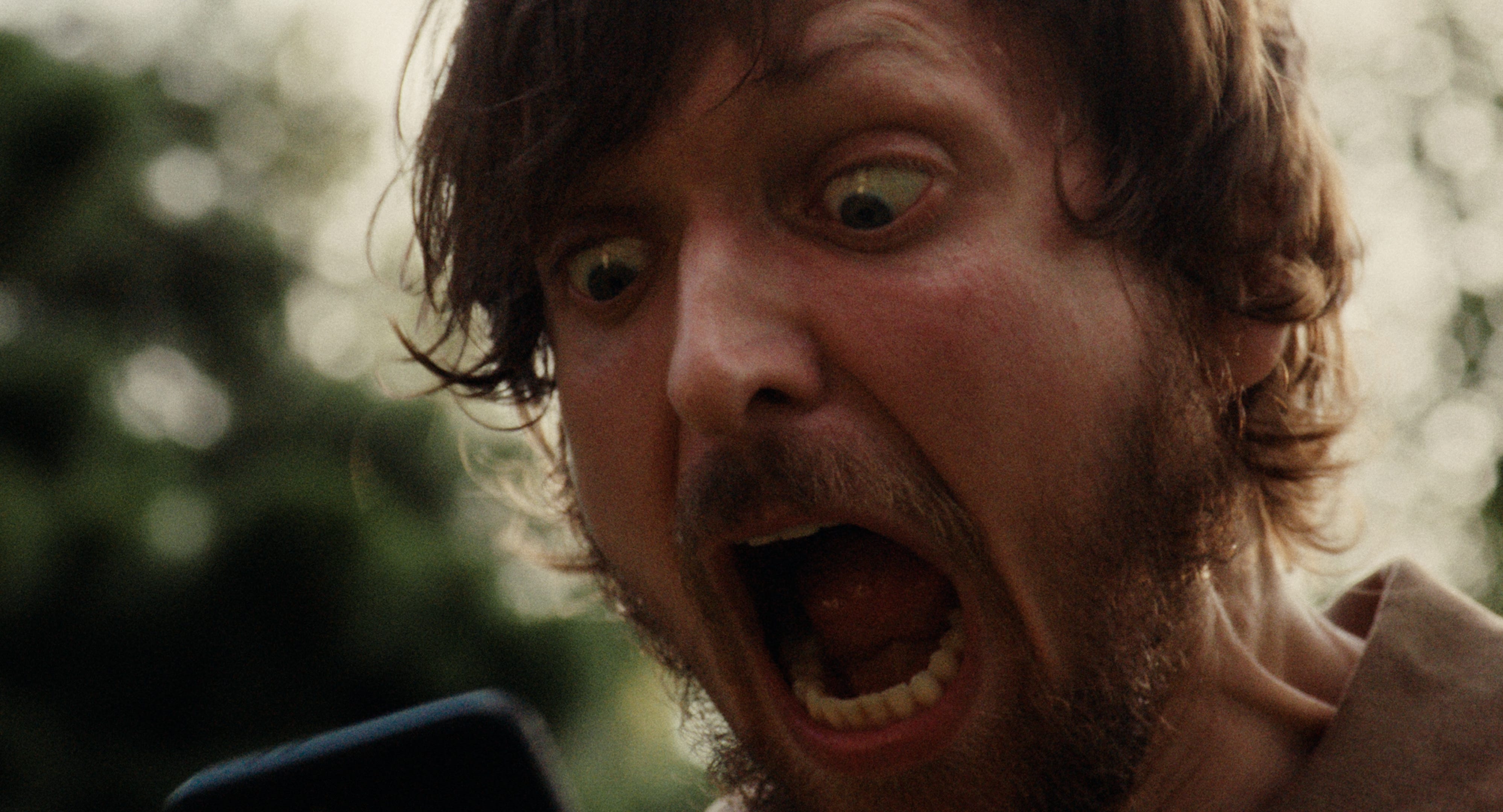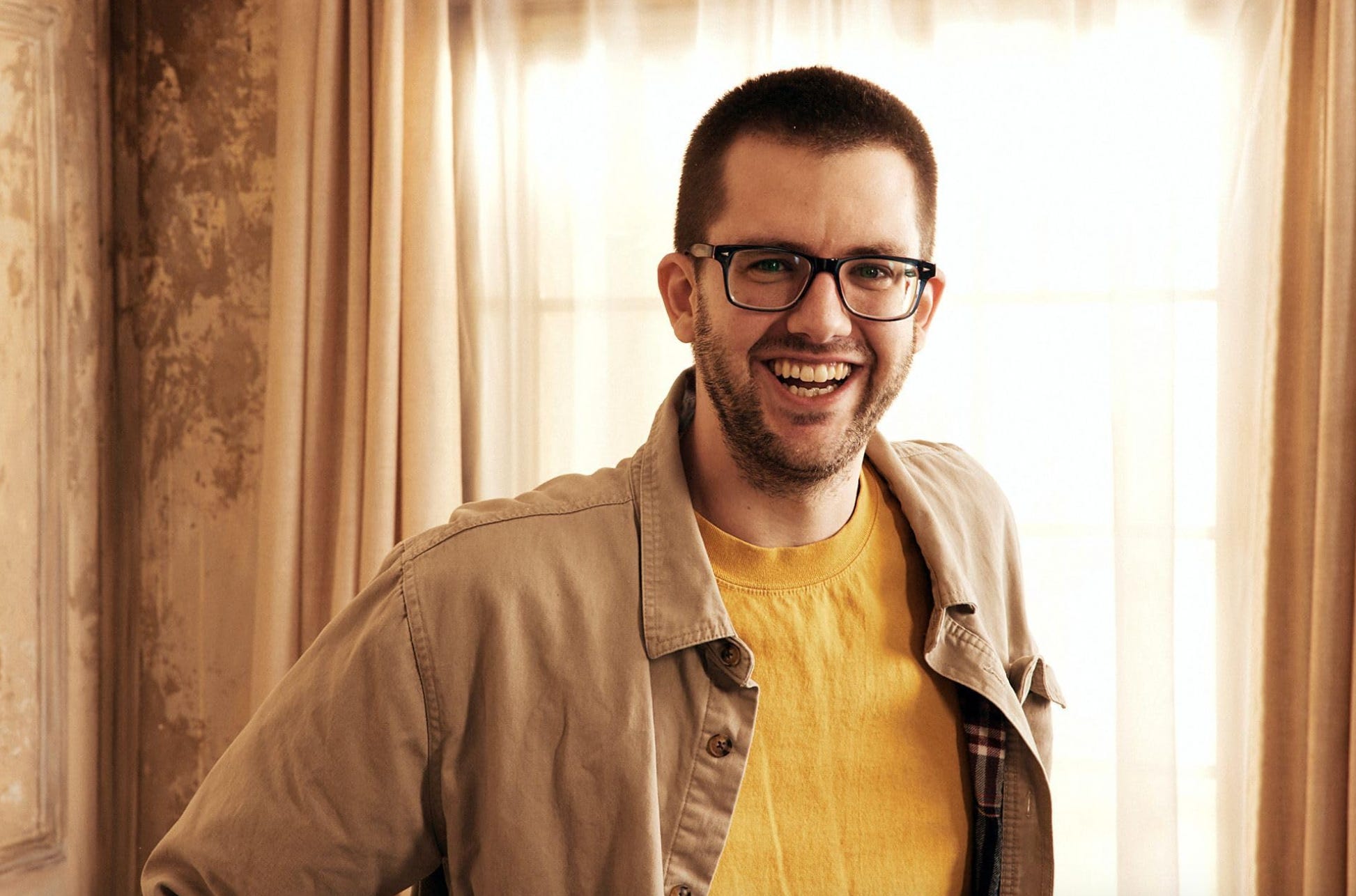
On April 24 at 8:30pm, Bleeding Edge presents the Ontario premiere of Brandon Daley’s $POSITIONS, Tickets available here!
Earlier this year, Bleeding Edge presented the Toronto premiere of Anything That Moves, a funny, horny, genre-defying thriller that came from the depths of Chicago’s underground filmmaking scene. This week, we’re screening the Ontario debut of $POSITIONS, an equally hilarious and exciting thriller from fellow Chicago boy Brandon Daley (featuring Anything That Moves director Alex Phillips in an extremely gross cameo that’s too funny to spoil).
Since debuting at SXSW last year, $POSITIONS has been described as Safdie brothers in the Midwest for its fast-paced, anxiety-inducing pacing, but it also owes great deal the kinds of “dumb guy” comedies that Daley was raised on in the 90s and 2000s, with lead actor Michael Kunicki bearing more than a striking resemblance to Canadian comedy legend Tom Green. Kunicki plays mild-mannered Mike, a mild-mannered working class guy with a factory job and a developmentally disabled brother (Vinny Kress). Sensing an escape from his mundane surroundings, Mike bets it all on a volatile new cryptocurrency as his life crumbles around him.
Few movies can claim to be as propulsive and entertaining as $POSITIONS. As Mike’s crypto portfolio rises and falls, the choices he makes compound his problems, eventually dragging his girlfriend, his newly sober cousin, and his father into the mix. Daley has a comedian’s eye for finding the laughs in a tragic situation, and an old-school screenwriter’s knack for raising the stakes of his main characters to dizzying heights.
We chatted with Daley about his new film, making movies in Chicago, and the perils of making indie movies in this day and age.
Bleeding Edge: Just to start things off, what’s your portfolio looking like? What kind of crypto are you investing in these days?
Brandon Daley: I currently think I have about $10,000 in Fartcoin. Do you know much about Fartcoin?
BE: No, but I can imagine.
BD: In 2020 and 2021 when I was originally really into crypto everyone was all like, “yo, this is gonna change the future, cause it’s Web3, and there’s technological implications.” It makes it all really confusing to navigate, because you do start to buy into some of these narratives. What I like about crypto in 2025 and 2026 is that that shit is off the table and we all realize what it is now, which is just player versus player gambling. I do think that there may be some sort of use cases for Web3, Bitcoin, things like that. I’m not by any means totally against it. I have a very “chaotic neutral” standpoint on crypto. I think it’s very fun to gamble on the internet. So I like Fartcoin because it’s just the stupidest shit possible. Ultimately all of these are just leveraged Bitcoin options trading or something, like when Bitcoin goes up 1% these all go up 20%. So, I have a bunch of Fartcoin right now, to answer your question.
BE: It seems like everybody has just sort of accepted that all of the most unscrupulous celebrities are just gonna do a rugpull cryptocurrency at some point. And that’s fine! They’re not gonna face any consequences for it. Maybe the president, too?
BD: Yes, the president really changes things. I think there was much more of a legal gray area prior to Trump doing it, and now that the president has done it, I think all bets are off.
BE: So how did you start making this movie? Was it an interest in crypto or was it something else?
BD: I think with most of my movies that I end up following through with and making, usually I will have two ideas for two separate movies, and then I will realize that neither of those ideas is enough to warrant a full script, so I will then merge those ideas into one. I do that with shorts, I’ve done that with other features, and this one--I got really into day trading stocks originally, like on r/WallStreetBets, before the GameStop shit. So I was in GameStop early. I put $5,000 into that, I rode it up to $25,000, and sold. So I did good on GameStop, and then I rolled that slowly into crypto. That was when we were all locked up. Rode the crypto up to $65k, and then rode it down to $9,000. I exited that cycle at around $20-25k, so I was still net positive if you count the GameStop, but crypto alone probably even or negative if I had to say.
I was so constantly enthralled with checking my phone. I would wake up at 3am, check my phone. I’d be at dinner with friends and family and not be paying attention to what’s going on. At this same time, my uncle Danny had died of COVID, and my mom was mourning him very hard. She was in Kansas, I was in Chicago, and she would be calling me crying, and I would be checking Fartcoin or whatever while I had her on the phone. And then there’s a level of guilt with that.
I wanted to explore crypto and stock investing from the perspective of the retail investor, because I don’t think there’s been a movie like that before. And most Bitcoin movies are, like, talking head documentaries on Netflix that aren’t very interesting to watch. So I wanted to do something from the retail perspective because I think it creates a cool propulsion of the plot; it’s a very simple device that you can follow throughout the movie. On top of that, I’d always wanted to make a movie about growing up in Kansas. I don’t think that the Midwest is very accurately portrayed in movies. A lot of movies are getting made in LA and New York. I purposefully stayed out of those cities in order to keep making movies outside of those systems, and to stay true to where I came from. So I wanted to make a movie about the Midwest, and I specifically wanted to make a movie about this period of time where I was coming home from Chicago. I was smoking a ton of weed at the time, and I was thinking I had to go a week or two without weed, and that was kind of freaking me out. And then at the same time my cousin was home, and I hadn’t seen him in like ten years. He was there getting clean off of heroin. We hung out for the first time in a long time and reconnected. We were good buds when we were kids, but we just led very different lifestyles. I had the greatest time hanging out with him. All that said, I had always wanted to make a movie about that, and then I wanted to make a movie about crypto and investing. And I thought, especially with my mom and my uncle Danny dying, it had me thinking about the connection of those two things. And so I merged the two ideas into one movie that would explore my childhood and also scratch this itch of this subject matter I was really interested in.
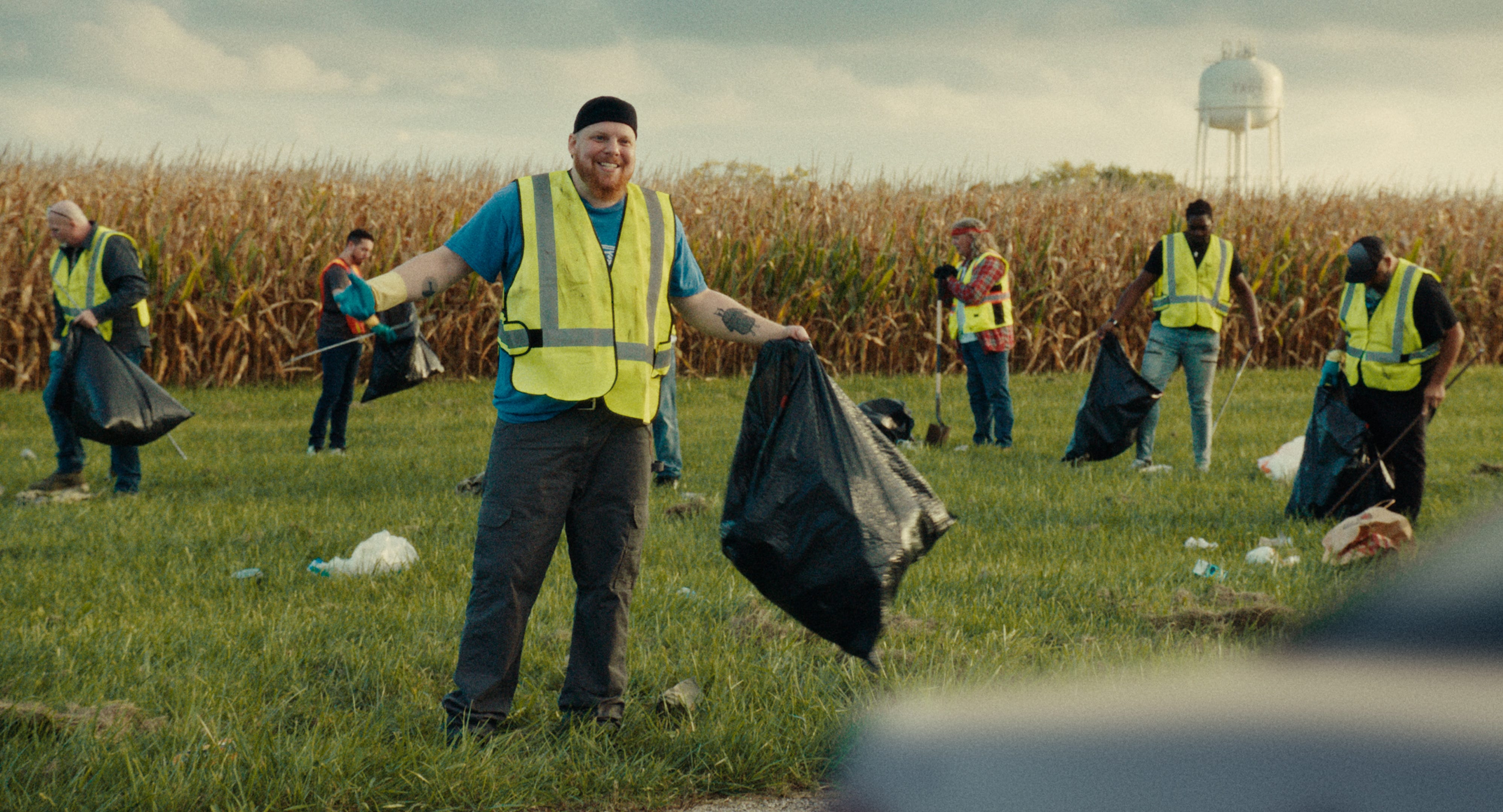
BE: The movie’s obviously set in the Midwest. Various critics have called it a “Midwest movie”. You’re based in Chicago now, did you go down and film in Kansas? How did you make it authentic to the Midwest experience?
BD: I wrote this movie because I had scripts I was trying to fund and nobody would fund any of them, and it was hard to get people excited. I was like “I’m going to write one last movie, and then just stop making movies probably.” So I wrote this movie with the idea that I could fund it myself for no money, and I would go back to Kansas, shoot it for free in free locations, and cast my actual family to be in it. I was going forward with that, and then I had investors in Illinois approach me and say “we want to be involved in this movie, would you want to do it here in Illinois?” Because there’s a large Illinois tax credit, and there’s infrastructure here. So I was able to do it at a larger scale than I originally intended. But I still wanted it to feel like the Midwest, and not Chicago. Luckily, you drive 20 minutes outside Chicago and everything looks exactly like Kansas. We shot in the burbs, a lot in Chicago Heights, a lot in the south side. We tried to make it feel as midwestern as possible, just in the locations.
BE: In terms of pulling together the cast, where did you find your actors for the most part? There’s some unique faces that you see in this movie.
BD: Michael Kunicki auditioned for one of the side characters, and I really liked him. I thought maybe he could be the lead. We ended up casting him about two weeks out from our production start date, so it was very tight. For Vinny, his brother, I had been going through Special Olympics and different special needs theatre groups, and I was working with all of these different families who were auditioning for the role. I also had just randomly made a post on Craigslist. It cost me eight dollars and I was like, “I shouldn’t pay eight dollars, nothing’s gonna come from this, but I guess I might as well do it.” We ended up finding Vinny through that post. Somebody saw it and sent it to his family. So I auditioned Mike and Vinny together about two weeks out from production, and I liked their chemistry.
Aside from them, all of the supporting characters are people I found on location scouts and people my producer Jake Bloom had recommended just as interesting personalities. Like the dad character, he’s not an actor, we met him on the location scout for the house we ended up shooting in. I was like, “do you maybe want to read for the dad character in this?” I really like Andrea Arnold and the way that she works, where she’ll take one or two actual actors and throw them into a situation with a lot of non-actors. I wanted to build that kind of environment on our set as well. I think it makes it feel very lived-in. I also think as much as the locations add to the Midwestern energy, so does the casting of non-actors. Just having people be themselves on camera. A lot of people have never acted before. They did a good job!
BE: To zero in on Vinny: to have an actor with disabilities play this large of a role, especially on such a low-budget movie, is pretty unusual. How important was it for you to have that role in the movie? And what were some of the challenges and rewards that come with working with somebody with disabilities like that?
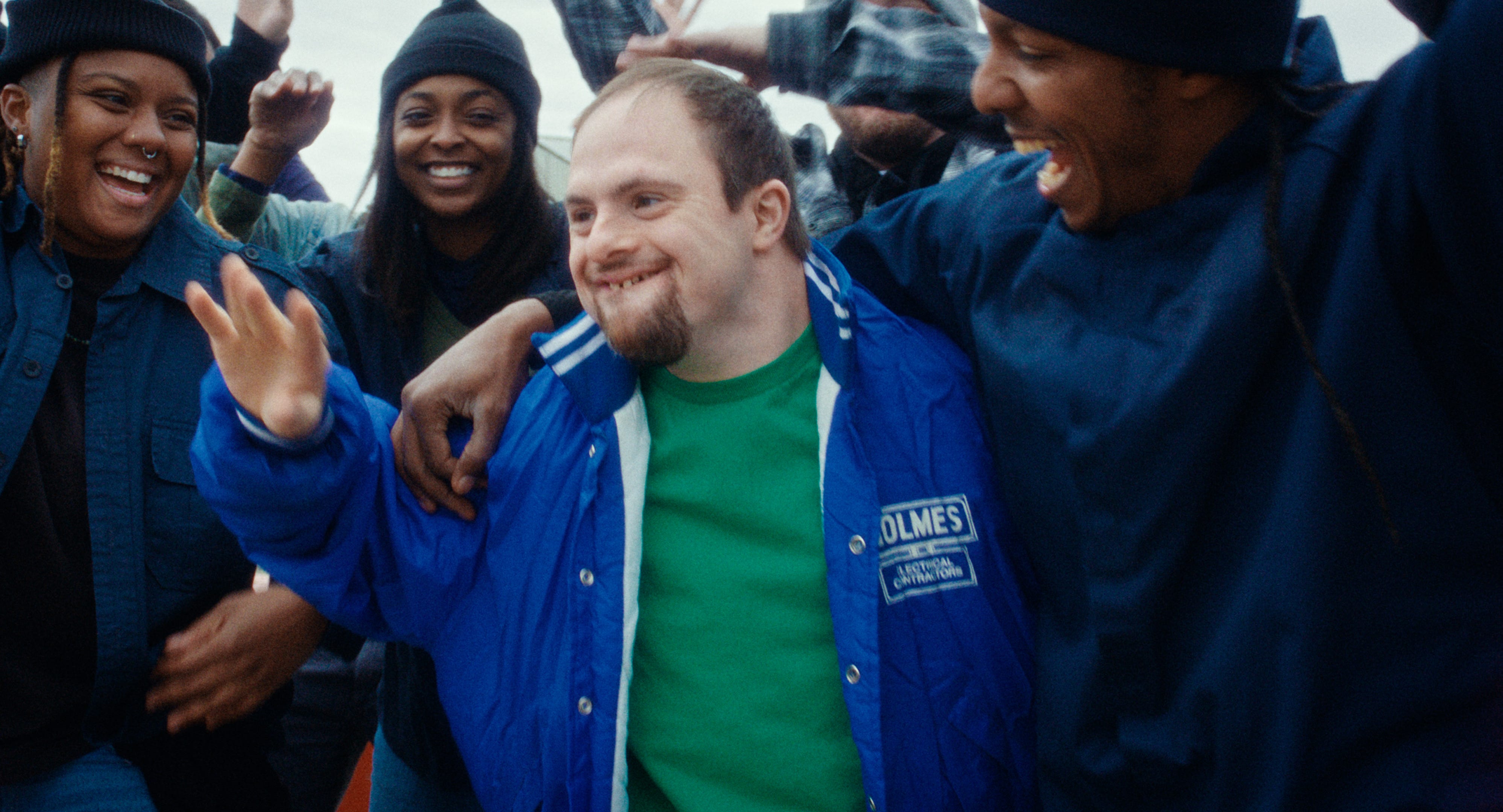
BD: I think I approached that role on a screenplay level as just being more of a plot device. I left it very open-ended because I wanted to mend that role to whatever the specific disabilities of the actor we ended up casting were. I had auditioned people with autism, fragile X, and lots of different genetic disorders. I was very open to what that disability would be. I did just think, from a narrative standpoint, I think it rings true that people have random hard things happen to them in their life. And you have no control over it. You randomly have a brother who has this kind of thing. That just narratively spoke to me because I see that with my friends and family who are living these types of lives where there’s just this random thing that happened that they have to deal with. I think the decision to have a developmentally disabled brother was because I wanted to talk about this idea of God putting obstacles in your life. Well, I approached it like that, but then the other thing is you meet these families and it really doesn’t feel like an obstacle. Certainly they have to change their lives to be able to support this. But these people are incredibly happy, their families are very close. Vinny’s dad is always saying “don’t call it a disability, we’re the people who are disabled. They have superpowers that we don’t have, because we’re so wrapped up in life.”
I was very nervous about it originally. During the camera tests, he would look directly into camera and yell “action” a lot, so there’s a ton of outtakes where he’s looking directly into camera and yelling “action”, which is very charming, but it’s hard to make a film production around that. I was a little worried about it working. On the very first day of production I purposefully included a very heavy scene between Mike and Vinny. It was a lighter day, but we had this insanely heavy scene, which in the movie is where Mike returns and the computer is missing. And he’s pulling Vinny to get out of the house, and he’s yelling and frantic in front of Vinny. We did a lot of stuff with body doubles where Mike could scream and yell really loud without freaking Vinny out, but then we realized as production went on that Vinny did not care at all, he thought it was funny. But early on, we structured it so Vinny wouldn’t look at the camera, we have a body double so Vinny’s not scared, I set up my Xbox in the garage so Vinny could watch movies and play Xbox in between his takes. We built the operation around working with him, but it was a little overkill because he was just so down to hang. By the end of production he was just, like, hanging out. And he also really came full circle as an actor. At the beginning he’s yelling “action” and stuff, and by the end he’s like “okay, we’re gonna do another take, I’m gonna do it again.”
BE: How has he been since the movie’s played? Has he seen the movie?
BD: He loves the movie. We just did cast and crew interviews on Wednesday, where I did some live commentary of scenes. I had Vinny watch his scenes on camera. For sound purposes we had the scenes muted, and he was watching it and saying his lines along with the video. And he was saying the lines of the other actors, too. He goes around saying he’s a movie star now, which is cool.
It’s a tricky line to toe, because on the script level you want the character to be a dependant. It needs to come off as though they’re dependent on Mike in order for the stakes to work. But then in production, you want somebody who can play a dependant without asking them to ham up their disability or something. But you also want them to be able to consent to being in a movie and be “with it” enough to be on set for six hours a day. So all of that is tricky ethical and moral territory for one thing, so that you’re not taking advantage of somebody. But also, representation matters too. Being able to have people from that community portray themselves on camera is important. Finding the balance there is something I thought a lot about in the lead-up to and during production.
BE: You’ve made shorts before this. You mentioned earlier that you got funding for this movie, it definitely seems like a level up in terms of the mode of production. How did you approach moving from micro-budget territory to this?
BD: I believe strongly in working with your team. As certain people level up they’ll abandon members of their team in order to please investors and things of that nature. I’m pretty firmly against that, I really think you should be bringing your squad up together. Not only for the sake of helping them but also for the sake of helping you, where you’re not all of a sudden stuck with some DP you’ve never worked with and you have some sort of weird problem with.
I think the only real difference was that I paid my crew and my cast. It was the same kind of production level as all of my shorts, but back then people were just doing me favours. I self-funded my shorts, each of them was like $4 or 5k, and that mainly went to food and camera rentals. But we were younger and scrappier back then, now we’re all 35 and we need money. Plus, a short you can do in two or three days, a feature’s a little different. I’m really glad I didn’t have to self-fund in Kansas, because I would have had to ask people to work for free. I was going to ask them... but I’m glad I didn’t have to. I’m glad we could pay people at least somewhat of a living wage.
BE: I know that the movie got a great reception at Fantasia. I’m wondering what the rollout has been like, hitting all these festivals.
BD: It’s been good. I’m really famous now. All my problems are kind of solved. No, it’s been cool. It’s crazy to see the number of good feature films being made, especially in the landscape of 2026, and the way that distribution and streaming work. Streaming used to be indie filmmakers’ friends, in 2015-2021 maybe, but now I kind of think that’s over. I don’t think that they’re going and buying random Sundance and SXSW titles anymore. So it’s a bummer, because I think the movie’s so good, and I think we did as good as we possibly could have done, and I see so many other movies on the festival circuit that are in the exact same position. It’s such a blessing that they even exist, but it’s hard to see if in this current landscape all this stuff manages to find an audience. The festival run was amazing, it’s so fun to watch a movie in a packed house, and I’m very grateful for all the festivals that had us. Getting into SXSW, like, changed my life. I was really just afraid nobody would see the movie and getting that acceptance email was such a relief to me.
BE: One last thing. The main character Mike, he has some real low lows. His life really goes to shit. Did you ever look at it and think “man, this character is too pathetic”? Is he going to give the audience the ick?
BD: I grew up on ‘90s dumb guy comedies. They’re my main reference. Everyone’s always like, “oh, he’s ripping off the Safdie brothers”. I would like to think that I would make this movie with or without the Safdie brothers existing. I’m a ball of anxiety at all points of my life, and I like movies that make me feel anxious. It makes me feel seen as an audience member. To be like, anxious from the movie and not because I’m thinking about what I said at the party or whatever. I want to make dumb guy comedies and dumb girl comedies. But I do think they need kind of a facelift. In the ‘90s you had these characters that were in these same sorts of situations that Mike is, where there’s no hope, they’re very stupid, but the tone of the movie didn’t treat it with that much sincerity, which I do think makes those movies fall off in the third act a little bit. I wanted to approach it like: we do all of the American Pie type of shit, but we have real stakes, so that stuff actually resonates with the character and feels dramatic, but it’s still funny. That’s the thesis of the whole project, I would say.
BE: The actors and the people around him, they look like real people. Which just adds to the verisimilitude of it, I guess.
BD: The way that we approached the shooting of it was like, let’s rip off Andrea Arnold but do it with comedy. There’s not a lot of handheld comedy. Let’s try a ‘90s comedy but handheld and with close-ups and gritty stuff like that. And then the character goes through these moments where he’s at his high, so let’s change the language to be more in line with these ‘90s comedies. The dance sequence for example, we switch to tripod, we switch to steady cam. It’s shot more in the way a comedy would be shot. And then as that degrades we fall back into the handheld language. So we’re going back and forth between those worlds.
BE: My friend Matt’s review from Fantasia was like “it’s kind of like a Safdie movie but if the main guy was Tom Green.”
BD: For sure. That’s why I cast Mike, he reminded me of Tom Green. I was like “I get to make Freddie Got Fingered, dude.”