

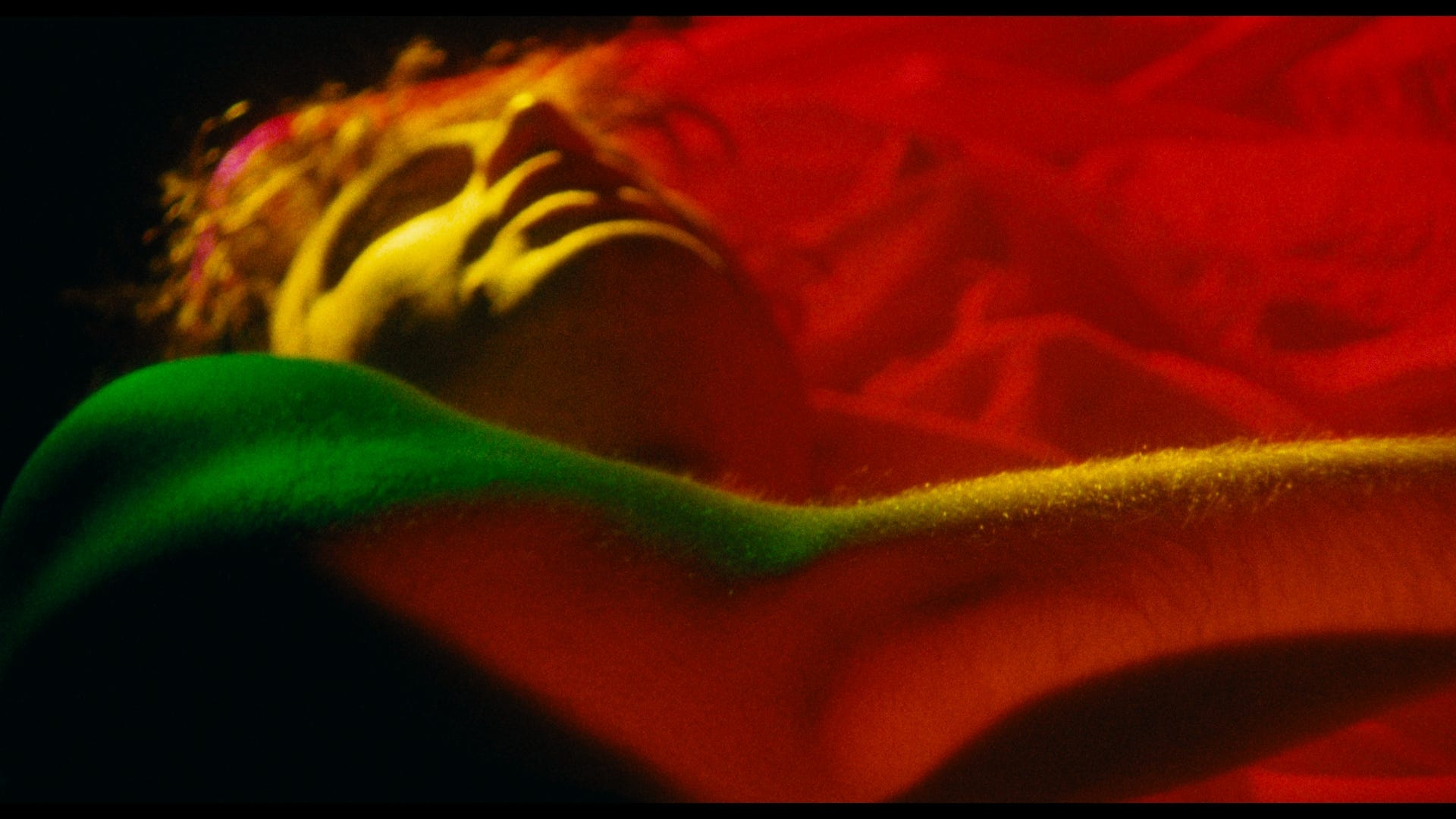
On January 21 at 7pm, Bleeding Edge presents the Toronto premiere of Alex Phillips’ Anything That Moves at the Paradise Theatre. Phillips will be in attendance for a live Q&A with writer and performer Andrea Werhun. Get your tickets HERE!
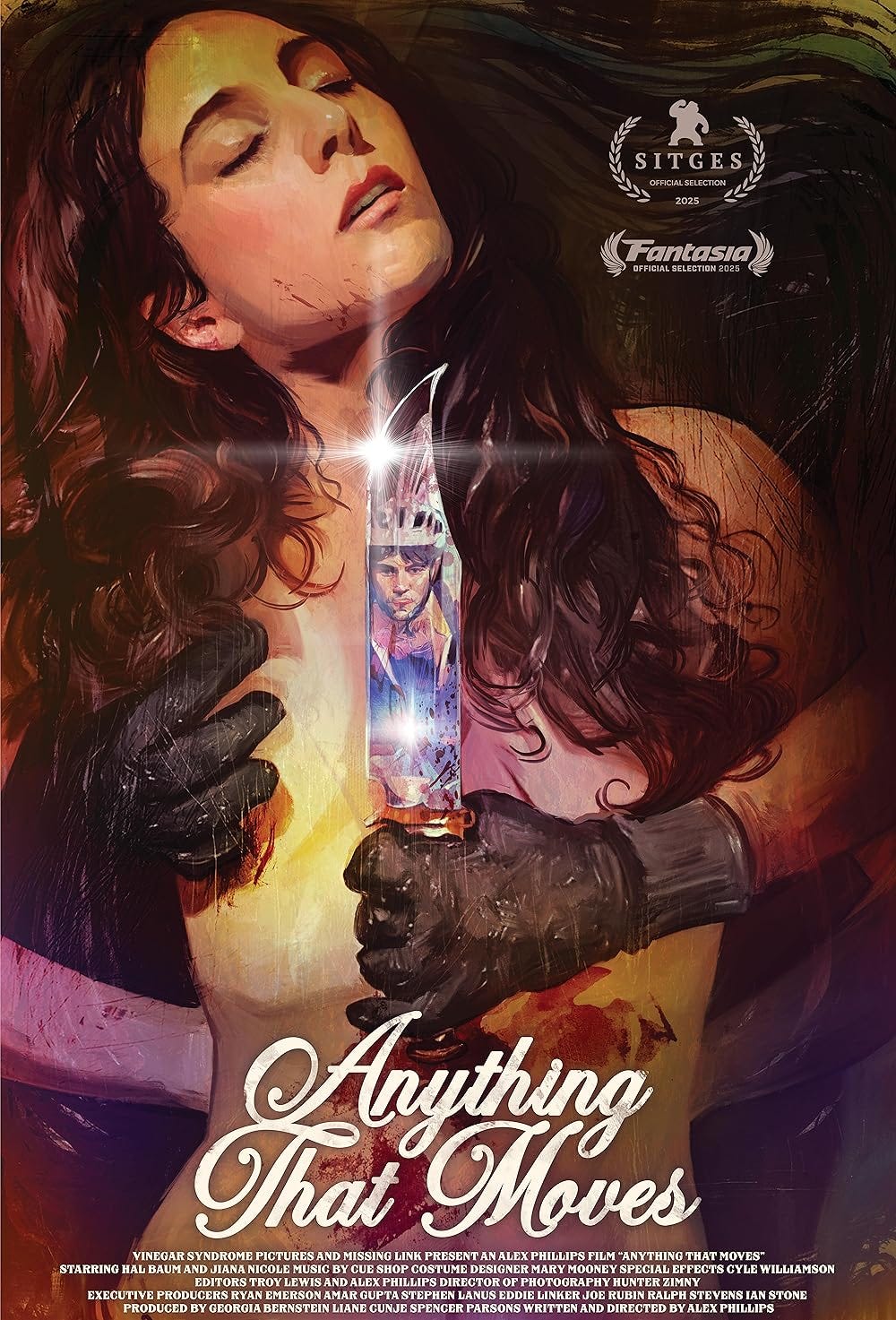
Anything That Moves, the second feature from Chicago director Alex Phillips, follows Liam (Hal Baum), a delivery boy-cum-sex worker, as he travels around Chicago selling his body and finding himself in hot water when a serial killer starts targeting his customers. As one might gather from that description, Phillips’ new film is full of sex (and violence, too), but a plot summary probably doesn’t do justice to the raucously funny, one-of-a-kind spirit that Phillips captures with his film.
Inspired by his own short-lived career in the gig economy, Phillips was inspired to make this film by considering the lonely, eccentric people he encountered as a delivery man himself, and what it would mean to fulfill their needs, sexually and emotionally. The characters in Anything That Moves (as well as Phillips’ previous film, All Jacked Up and Full of Worms) approach the world with curiosity and emotional acceptance. Despite the transgressive subject matter and the obvious influence of exploitation movies of the past, the sexuality of Anything That Moves feels counter-intuitively positive, a utopian vision of “people loving each other and having fun and understanding their own quirks and weirdness.”
Before the Toronto premiere of Anything That Moves this week, we got a chance to chat with Alex Phillips.
Bleeding Edge: So this movie is about a food delivery guy who’s also a sex worker. Those are two very topical jobs to have these days. Why did you want to combine those two things?
Alex Phillips: I worked in food delivery a while ago now, like fresh out of college. I was a philosophy major. That got me into the wonderful world of food service and fast food. I was kind of bumming around and delivering sandwiches to people, and I found that a lot of the clients that I was delivering to were shut-ins and, like, extremely horny. And I was a nubile 22 year old. I was in a weird position where I was objectified and it was new to me, leaving an environment and my peers and being ogled by different people out in the real world. It threw me for a loop and I started writing about it. And also taking it further, like, imagining what it would be like to actually fuck these people… it’s not my desire, it would be for them. But then what would it be like to give them what they wanted and needed? But I also saw that they were very lonely, and I was also especially lonely at this time. Like, you bring them food, and they’re shut-ins a lot of the time, so it’s like bringing the outside world to them and making them feel less lonely. So it’s not just about sex, I wasn’t just thinking about it in a pizza delivery, big sausage pizza, porn way. It was like, what would it be like to make these people feel emotionally complete? In giving them food and company and all that? And then cranking it up a notch for Liam in the movie, where it’s almost a holy experience.
BE: I guess you might be the only person they’re interacting with that day, so it might be something they’re really looking forward to.
AP: Yeah, and I’ve been sort of toying with this for a long time. And that was before the COVID lockdowns and stuff like that. So when I started writing it more, that also amped up the desperation and need for someone to enter their lives.
BE: Were there any specific experiences from your time as a courier that made it into the movie?
AP: I think I tried to relate a lot of this stuff to my own encounters in life. Specifically, like, in the woods, there’s that lawyer guy, and we’re dealing with him. I had an experience where I was with a close friend where they interpreted something going on that wasn’t going on, and it got physical and weird and I was like, okay, I have to write about this. Yeah, just trying to be careful, and specific, but also capture the idiosyncrasies of people. I like to heighten real life with the genre so you get to this real sort of explosive emotional place. So it’s theatrical, and visual, to really hit audiences with what the internal world of that experience feels like.
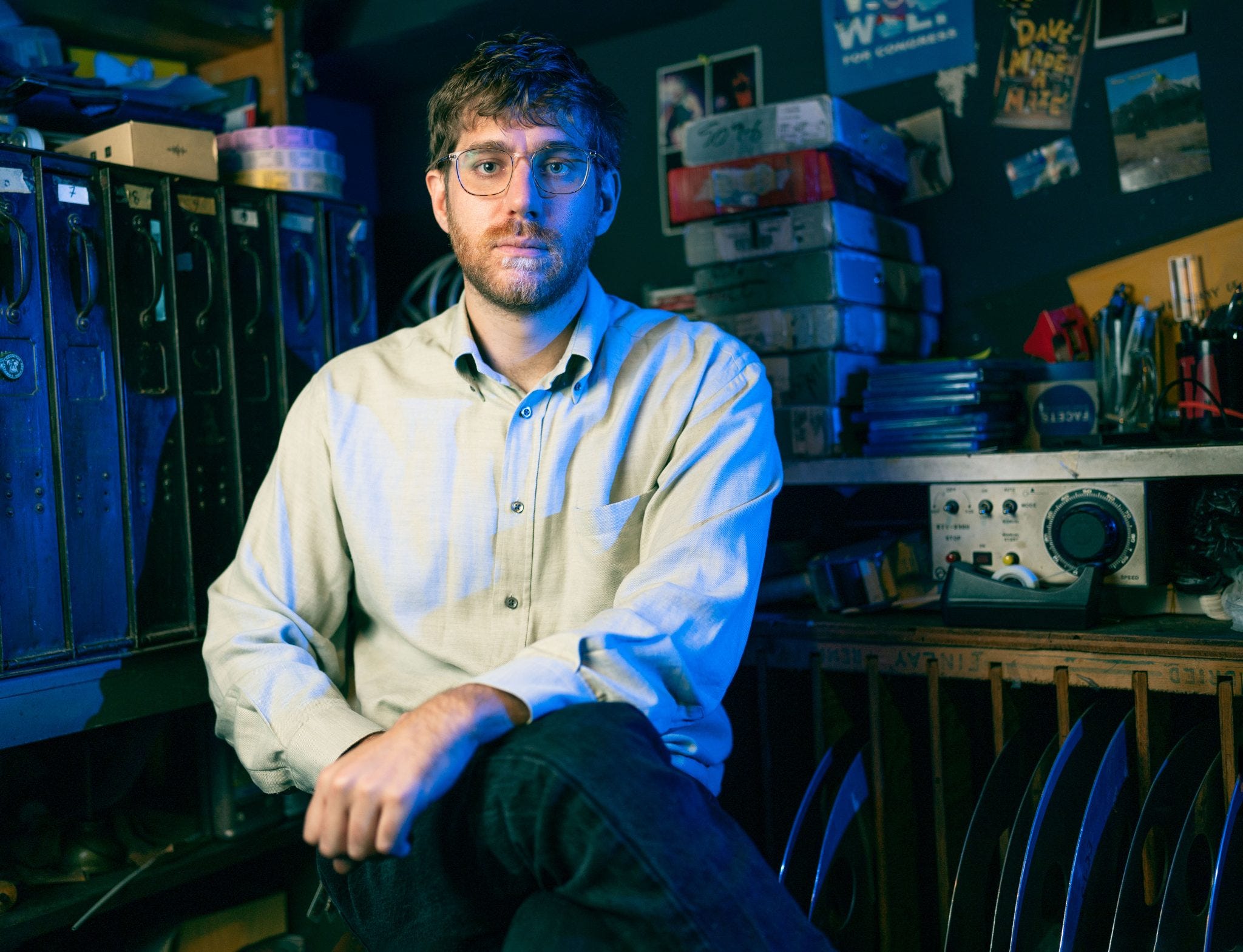
BE: In this movie and in All Jacked Up and Full of Worms, they have these absurd things going on but at the same time all the characters seem very emotionally open. What are you aiming for when you create these absurd scenarios?
AP: I find that a lot of movies have static two-dimensional characters. The way that we deal with characters a lot in storytelling is like, we understand this idea of a person. And I like to create characters that are extremely open. And then let them deal with the absurdity of life. Because I feel like a lot of the people I know, and everybody, we don’t approach the world with a fixed idea of how to deal with things. I find that that makes the characters more human, it lets us in a little bit more, exposing them to absurd stuff but then just letting them deal with it, and learn and grow from it.
BE: There’s an interesting mix of actors, including the main guys, there’s also adult film stars like Ginger Lynn Allen and Nina Hartley and filmmakers, Jack Dunphy and Frank V. Ross. I’m wondering how you put this cast together.
AP: Because we were dealing with sex and nudity, and since it’s a low-budget endeavour, we’re gonna be really running and gunning, so I like involving other filmmakers who kind of know what the hell is going on, so that they’re collaborators. So they’re not like “where’s my trailer?” Like, we’re all getting dirty in this. And it was amazing to be able to reach Ginger and Nina and to have their professional expertise on set. When Nina showed up we had been shooting sex and nudity scenes, and she was just a total pro in that she was so complimentary of Hal [Baum] and Maxton [Koc] in that van scene. She was like, “you guys are so brave,” and she also kind of took care of them and talked to them about her experience. We didn’t have an intimacy coordinator, but having these women that work in the industry talk about their lives and how this art was intersecting with it… it was really nice to hear their perspective and their philosophy on all of it. And how they also both seemed to not have any regrets working in the sex industry, and how they aligned it with their own personal views in the world and stuff. So it was really cool to have them. But yeah, casting was just all about figuring out who fit the role best, who was going to take the characters and run, but also who would work with me and go on this crazy adventure at the same time.
BE: And just to come back to shooting those sex scenes, can you talk a bit about the complications of doing that? Or how you approached it, you just mentioned that there weren’t intimacy coordinators.
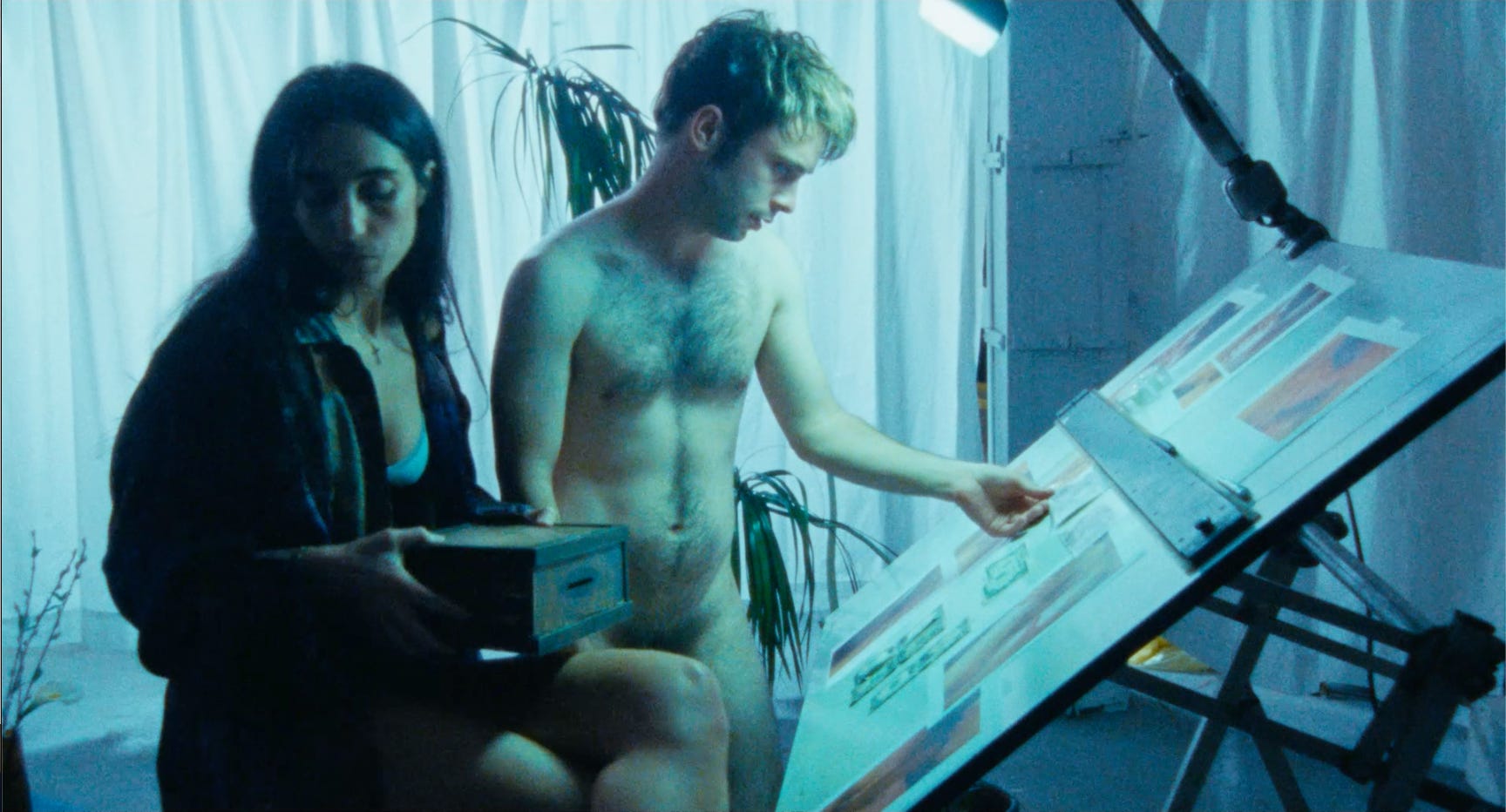
AP: I try to be up front in casting, where it’s like, “there’s gonna be sex and nudity, there’s gonna be blood and guts.” I want to, not frighten people, but be very up front and serious about what’s gonna happen on set so that there’s no waffling when we get there. I don’t want to have to coerce someone into doing something that they don’t want to do. So I wanted to find people that were really enthusiastic and down to do it. So then when we got there on the day it was just about where their bodies go and how the camera moves, and just choreographing these sex scenes. Like that–I call it the dead guy orgy–it’s right after the club, we rehearsed that ten times maybe where they’re all climbing over each other and stuff, and I’m talking through every single take of it. There was no room for them to experiment and put each other at risk. It was like, no, we’re going for cool imagery and intensity but it’s all planned out and we know where we’re going with this.
BE: You shot this on 16mm. Hunter Zimny (What Doesn’t Float) was the cinematographer. Can you talk about why you wanted to shoot on film and if that’s important to your process?
AP: On All Jacked Up and Full of Worms, and also my short film Who’s a Good Boy, we shot on Super 16 gate digitally with Super 16 zoom lenses. Financially it made the most sense in terms of, this is the glass that we can afford. These are the cinema lenses that we can get. I think my visual language is definitely built around that sort of cropped-in closer look on things. The way that Super 16 works, there’s not a lot of shallow depth of field, so you block the whole frame and you move people through stuff and I’m always really into that. Also on Worms and Who’s a Good Boy we were trying to go for a filmic look, whatever that means. Especially Worms, the colorist, Dan Stuyck, who also worked on Anything That Moves, it was cool to work with him and figure out what film stock we’re trying to emulate. Like, are we putting film grain in the highlights? What are we doing to the blacks to make it look film-like? He talks a lot about putting blue grain into the shadows and stuff like that. He’s got all these tricks. And also all my references are shot on film for the most part. Honestly it was just really cool to have Vinegar Syndrome and to have them be able to provide film. Instead of doing it to emulate it, actually being able to shoot the movie the way I want it to look on the stock that I want it to look like. It was just a no-brainer at the end of the day.
BE: How did Vinegar Syndrome get involved?
AP: After All Jacked Up and Full of Worms premiered at Fantasia I met with Liane Cunji who produced Anything That Moves. I met and I pitched her this movie and I just sort of continued to pitch it to her and talk to her about it at Fantastic Fest, and then I met with the team at Vinegar Syndrome and talked to them and sent them the script and stuff. And it was cool, once they were interested it was just a series of meetings, and pulling together the plan and the financing and stuff like that, and it just came together really nicely. I think they were really hoping to expand on their production side of things, and like, get movies out into the world that kind of fit what their original mission was with Vinegar Syndrome. So I think my sensibilities and theirs really aligned for this thing.
BE: And there was no pushback over the content? Or questions of if anything went too far, anything like that?
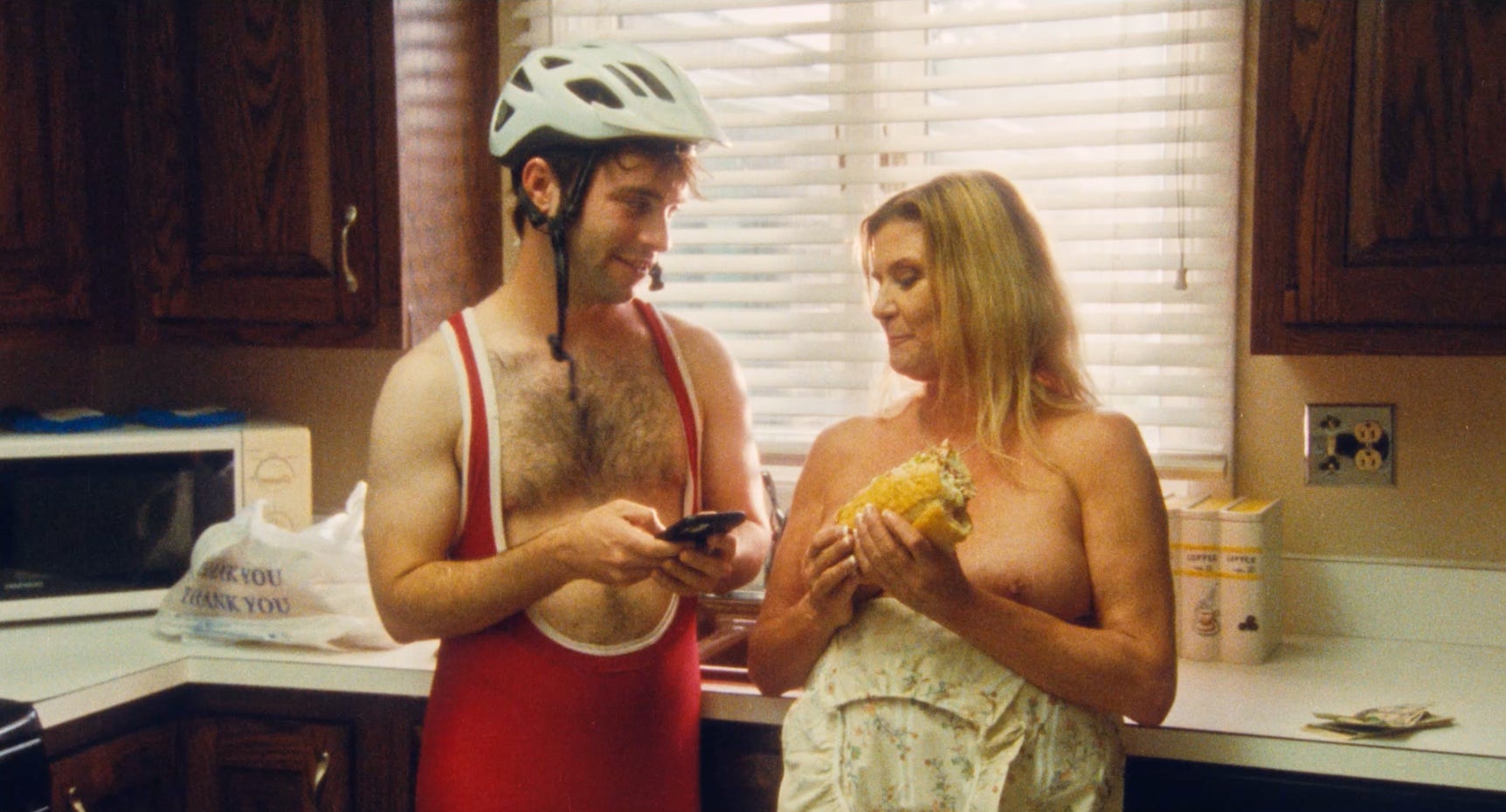
AP: No, no, it was really cool. And my executive producer Eddie Linker who’s been working in Chicago for a while, he’s like the best guy you could ask for, where once he trusts you to make the movie then he’s just sort of like “do your thing.” And really everyone is just supportive. Going into the project with an open mind and thinking of everyone involved as collaborators lends itself to a positive experience as opposed to me being, like, “I’m the auteur and you guys are the suits, and we’re at odds.” No one was trying to push me in any way. Because I trusted them they trusted me. And I got to kind of go crazy.
BE: That’s awesome. I was reading the press release, and I thought it was interesting that you talked about wanting to display intimacy and you actually brought up a political element where you said the open intimacy itself “attacks the cultural conservatism of the United States.” I was just wondering if you could expand on that, on the sort of political import of the film.
AP: I guess the United States is pretty puritanical in a lot of ways. It’s really weird, on one end of the spectrum all audiences are kind of fried to what is transgressive. We can’t really be surprised. But at the same time, there’s a lot of outrage. It’s like a weird worst-of-both-worlds type of thing. Yeah, I don’t know, like, yesterday I was looking at Elon Musk tweeting some Nazi stuff. He said something like “white people need to band together,” that was the gist of whatever he was retweeting. And it’s like, this is some shit that the cop would say at the end of Anything That Moves. I mean, I was going off when I was writing that, I was like “young white men have turned into sluts! They should be Vikings in the sky!” I was just having fun but there’s this guy who worked at the highest level of the United States’ government basically saying this stuff. So, I don’t know. The most ridiculous thing that I could come up with is going on in the U.S. I think showing people loving each other and having fun and understanding their own quirks and weirdness is a very local, interpersonal thing that can ground people and make them good to each other. That’s my political stance.
BE: That’s nice. So you’ve been showing this around different festivals and screens. I saw it at Fantasia in July. I’m wondering if there’s been any surprises in terms of what people are responding to, anything that you haven’t expected in terms of how people are receiving it?
AP: I’m trying to think, I’ve just been really excited that it’s reached as far as it has. I feel like with All Jacked Up and Full of Worms it was intentionally, and also received as, like, look at this freaky-ass thing that shouldn’t exist. And I feel like this one, I was able to shoot all the way through. Like, I have a full shoot. Worms was shot in tiny little chunks over months. And this was like, let’s all shoot in succession and with a plan. And that was pretty cool. I love trash and underground cinema and the sleaze of it all, but also to have a festival like Sitges that’s a little bit fancier, to have some real critical minds respond well to it and run with the content and aesthetics of it and really read into it and, like, extrapolate. There was just a lot of cool writing that came out of it. And to win Lausanne Underground, the stuff that the jury said about the film was beautiful, and having our Fangoria write-up… to be in Fangoria was pretty amazing. Also then to have this theatrical run, it’s bigger than what we were able to do with Worms. And to be able to play with you guys, and play at the New Beverly was really fucking cool. The movie was a real labour of love. We had a lot of support in our tiny labour of love with Vinegar Syndrome, but it’s still a very freaky tiny thing. To have larger institutions and people actually engage with it is pretty cool.
BE: Awesome. You were talking about some of your reference points that are all shot on film. I’m kind of wondering with the content, this sort of underground, transgressive cinema, what are the sort of influences and reference points that you would point to as something that helps you figure out that this is something that could be a movie, you know?
AP: I’ll start in the opposite direction with like, high-end stuff. Accattone and Teorama, the Pasolini films. Those feel really charged. And deal with sexuality and like, poetic wayward souls and all this. That’s sort of the high water mark. And in the opposite direction, looking at trash like the Morrissey films… I guess I don’t discriminate in terms of what’s high art and what’s low. There’s just like a ton of reference points that we went through. I just rewatched The Paperboy, the Lee Daniels film. It’s so good, and so gnarly. And there’s a lot of A-List actors in it. And Friedkin, we watched Cruising…
BE: It’s kind of funny you bring up that high art/low art thing. I saw somebody sharing the poster for the American release of Contempt. And it was just Bardot’s ass. That was the entire selling point. So many of those old art movies were just sold on sex appeal at the time.
AP: Yeah, it’s actually really funny. And now I feel like sex can sometimes eliminate the possibility of it being high art. It’s like we’re the other way around now. Are we using high art to smuggle in sex, or sex to smuggle in high art?
BE: We’ve done a lot of movies from people who were in the New York independent filmmaking scene, but not a whole lot from Chicago. We played The Becomers.
AP: Oh yeah. I did sound for one day on that movie.
BE: Oh nice. I guess I’m just curious, what is the scene like in Chicago? Are there exciting things happening? Does it feel like there’s a cohesive thing there?
AP: Yeah, definitely. Maybe you’ve noticed this year there’s more films coming out of Chicago, I feel like we have a little thing going on. My good friend Brandon Daley just came out with this movie $POSITIONS.
BE: Yeah, I’ve seen it. Just watched it a couple weeks ago, actually, it was really fun.
AP: Yeah, it’s great. And my penis is in that movie, I’m one of the people peeing into the…
BE: I noticed, yeah.
AP: You noticed, great! His producer, Ben Gojer, produced a ton of movies in Chicago, he produced Worms as well. And also their producer Jake Bloom is doing cool stuff around here. My guy, Spencer Parsons, who produced Anything That Moves, he’s been in Chicago for a while–he’s a professor at Northwestern. He’s been in the scene for a while. And then also Eddie Linker who executive produced Anything That Moves, a lot of cool stuff goes through him. Chicago is a very small, tight-knit scene that is, I think, doing really cool stuff now. Going to the New/Next Festival in Baltimore, there was a big group of Chicagoans. It was cool to all run around together. It wasn’t just the east coast kids or the LA kids, it was like “oh yeah, look, there’s these Chicago guys.” I think something’s happening, I don’t know where it’ll go, but I’m excited. We’ve all been working each other’s movies and shorts for a long time. And have been reading each other’s scripts and stuff. So it’s cool to, like, grow together.