On July 28, Bleeding Edge screens the first season of The Ember Knight show at Market Video! Ember and her brother/collaborator Eamon Shea will be in attendance for a Q&A! RSVP for the show HERE!
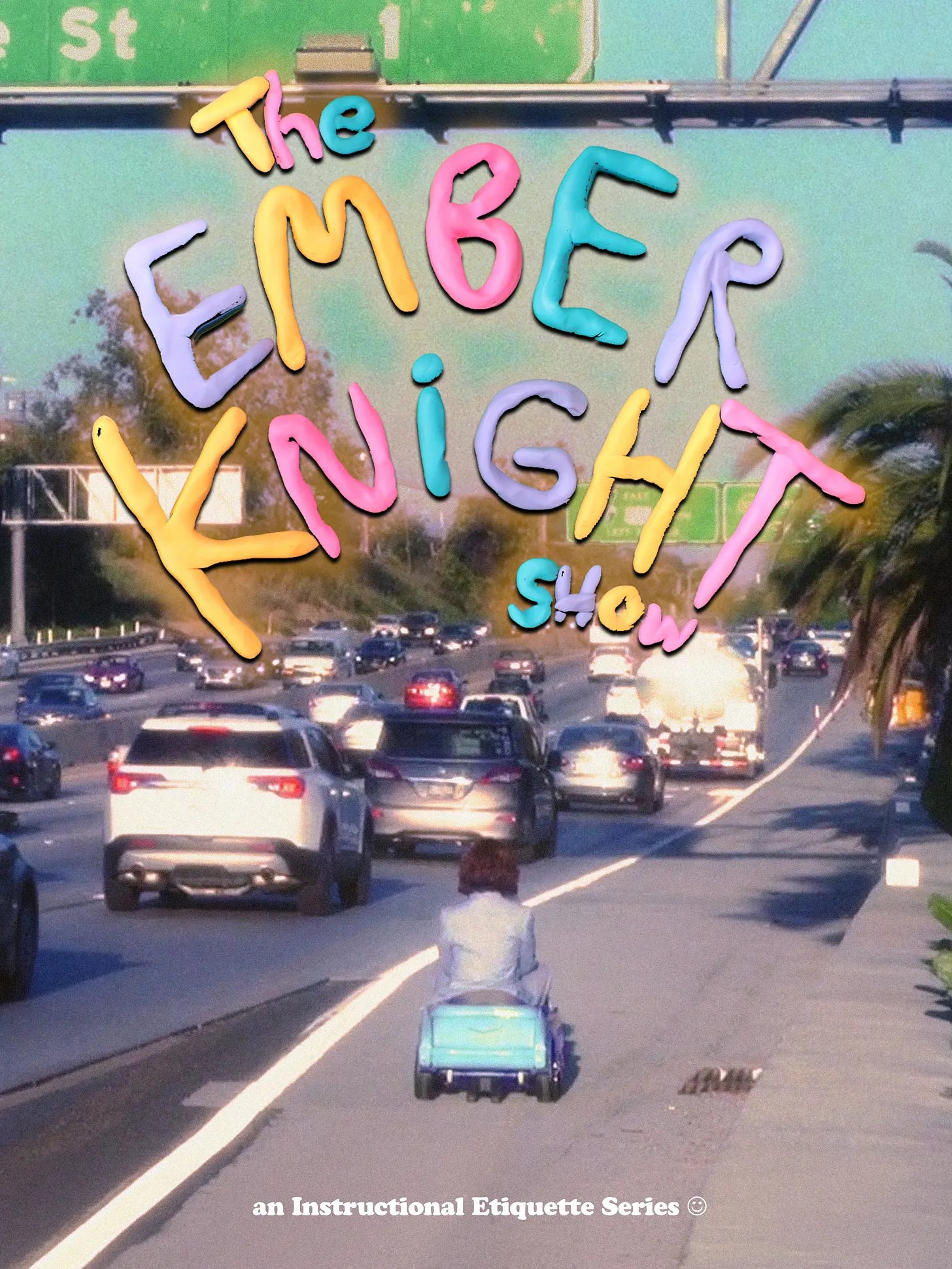
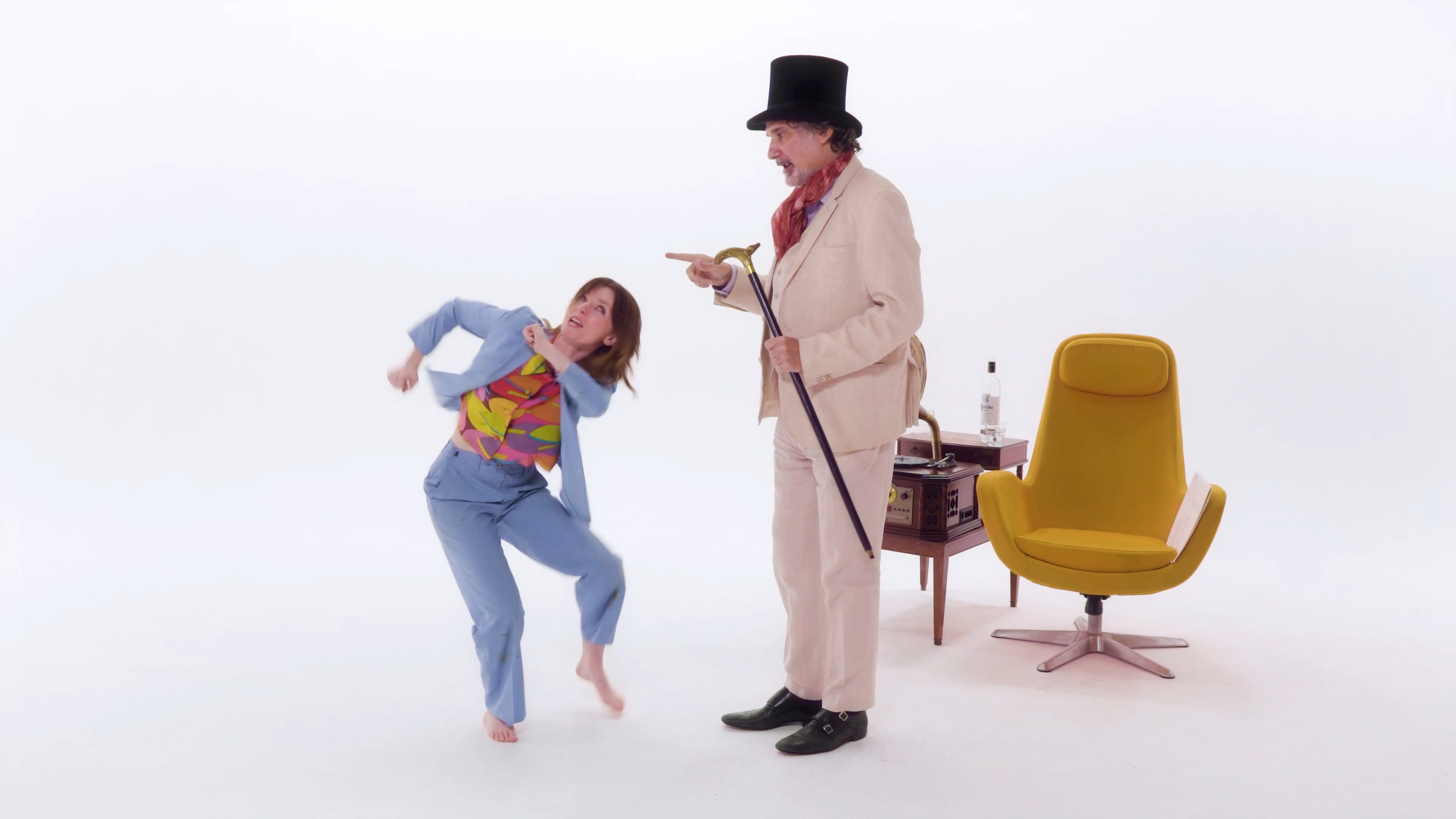
Across five episodes of The Ember Knight Show, an independent web series created by Knight herself, Bobby McCoy and Mikey Santos, a TV host stress tests her own rules of etiquette against real-world scenarios, travelling through Los Angeles (and sometimes, to the moon) in a baby blue tuxedo and a matching ride-along car. Made with a shoestring budget, The Ember Knight Show is a testament to hard work and imagination, incorporating Ember’s upbeat personality, a wry, sometimes vicious sense of humour, as well as elaborate, mind-bending stop-motion animation (courtesy of Adult Swim animator Clara Murray).
On July 28, Bleeding Edge screens all five episodes of The Ember Knight Show in its entirety. Originally produced between 2020 and 2022, Knight is bringing the show back for a mini-tour across North America in preparation for a new film based on the character. We chatted with Ember ahead of this screening about what making the series, her experience with Adult Swim and what it means to be an artist in Los Angeles right now.
Bleeding Edge: Okay. Let’s wind it back to the beginning a little bit. This character of Ember Knight, the TV show host, who is supposedly teaching etiquette, but then reveals that she’s flawed in certain ways or maybe isn’t doing what she’s preaching. Can I ask where that came from?
Ember Knight: Definitely. I was watching a lot of Mr. Rogers’ Neighborhood at the time. I love the intimacy that he has with the viewer. It feels like he’s looking straight through the camera right at you. He’s moving at a pace that doesn’t leave anybody behind. He’s extraordinarily trustworthy and deliberate. I thought, what if I could use that device to put a magnifying glass on some of my worst attributes, some of my character defects, and explore them on screen and gain the viewer’s trust and say, come along, let’s go outside, let’s go on a journey that’s going to have this emotional theme. And then like, let’s stress test what I’m saying is the right thing to do and have that go wrong. I think that the self-insert could be a lot worse. And as we’re going into future iterations of this, all of that is going to get turned up. We now have this very innocent IP that we own that we can take in any direction. So if you have that character accidentally do something very offensive, it opens up these whole other dimensions of where you can go with it.
BE: The show definitely seems to get much more ambitious by the time you hit episode three and four. I’m just wondering how that happened and how this really elaborate animation became a part of it.
EK: Well, we made the first episode, standalone, for $300. And then in one sitting outlined the rest of the season by topic. I knew that the center episode, I wanted it to be animated or hybrid in some way. So after the Adult Swim SMALLS segments came out in December of 2020, that widened our reach significantly and we got Clara Murray through that. We put out an open call, like “we’re looking for a claymation animator. We want like a unique style. We don’t even really know what we’re looking for and we don’t have any money!” She was working at Adult Swim at the time and asked her boss, Dave Hughes, to put us in touch. She still lives in Philadelphia. She did all of that by herself remotely. She’s amazing.
We storyboarded everything out and then figured out what assets need to happen first and what gets put on top of them. For example, there’s a scene in episode three where Ember runs across the sand dunes of the desert island, and we had to carry that handmade cabana, which I’d made out of PVC pipe. We had to carry all that shit across all of these sand dunes to find this virgin turf that didn’t have any footprints on it. And we had to pick, like, okay, the courthouse will be there, the police station will be there, the school house will be there, the house will be there. And we get one take because then there’s footprints on sand. So for that one, we did ours first and then she built the houses onto it. For some of it, she would do things first and we would shoot around what she made.
BE: So you’re coming up to Toronto to screen The Ember Knight Show. Five episodes, which is the entire series thus far. I’m wondering what made you want to bring it on the road and bring it to a new audience?
EK: We’re getting right into it! The series was made by a small group of friends and we took about three and a half years to make it. The first episode cost $300, and then we start pitching it to Adult Swim. And we got really excited. We make another episode, I think it was $800. And then we get the deal to make SMALLS segments for Adult Swim Digital. After that, we get connected with this amazing animator, Clara Murray and we made the third episode for three grand. Everything’s going up. We’re in talks to go to series. We all fuck with this. We’re trying new things. It’s amazing, and that episode wins Audience Choice at Slamdance.
And then, as we make the two-part finale, the friend group falls apart. And you can really feel that, because those two episodes are very tonally inconsistent. There’s some really amazing parts. The Dino Stamatopoulos scene is really exemplary, but there’s a darkness to it. So we skidded into home base finishing that final episode before everything went to hell interpersonally. The series only ever screened together one time for that premiere event.
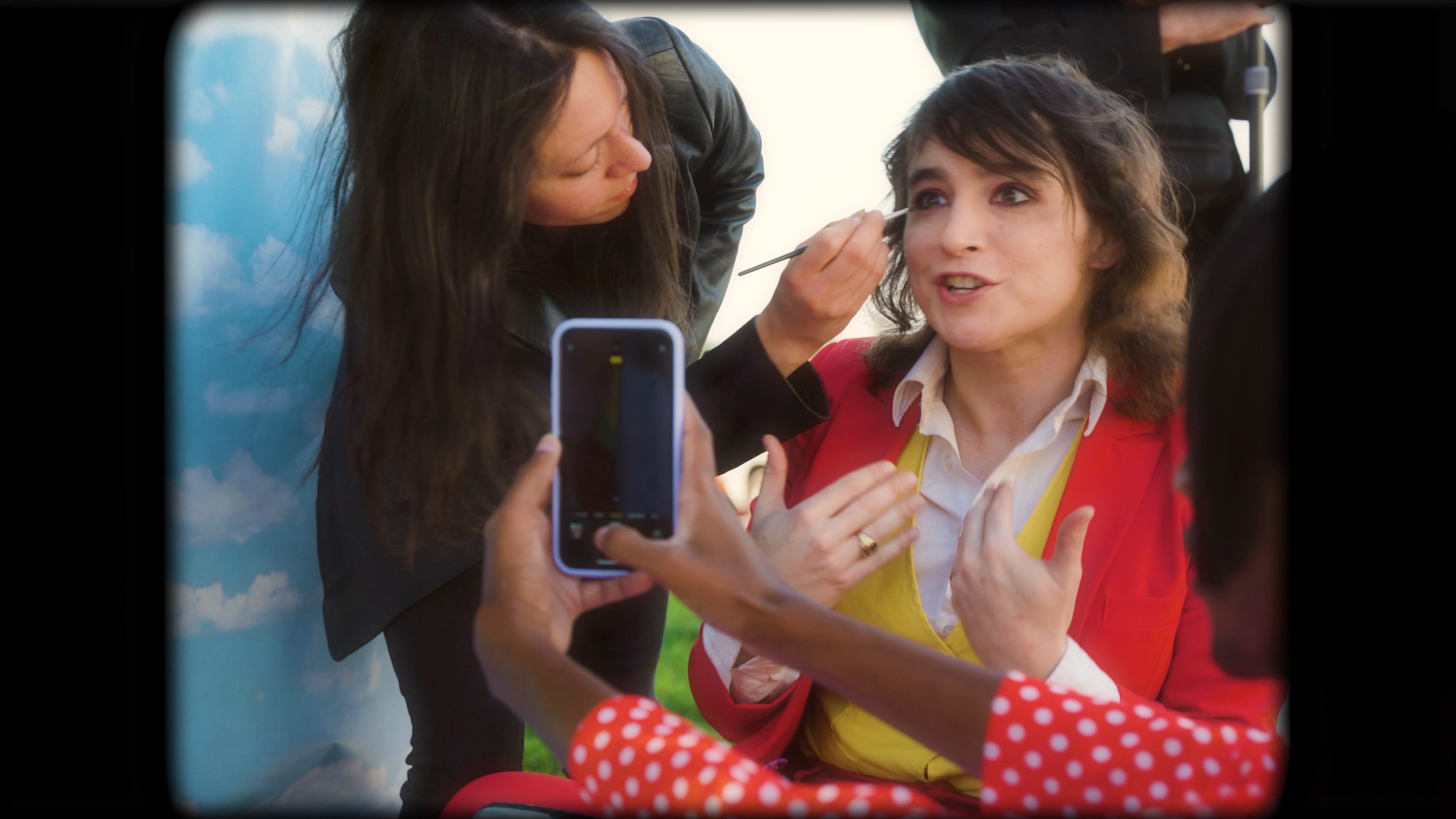
I’m revisiting the IP now. Eamon Shea and I started working on a feature that uses the same IP, but heightens it in several ways. So part of that process has been revisiting the original series. Of course, watching it now makes me want to put a gun in my mouth because I’m better at most things that we tried to do. Almost everything we did, I was doing for the first time. So I am actually really dreading watching it with an audience. Not once, but several times. But it’s a record of our time, you know?
BE: How did you end up pulling some of your collaborators in? Like Dino Stamatopoulos [better known as Star-Burns] for example?
EK: Dino is a good friend. He was a supporter. He connected us with Dave Hughes at Adult Swim. We also were able to shoot all the soundstage things on the last three episodes at Starburns Industries for free. Actually, during COVID, he literally just gave me a key fob. He was like, you guys can have the offices, you can have the bar, you can have the soundstage. We had no insurance, and I don’t know that anybody else at Starburns was OK with that arrangement, but it worked! Yeah, if we had to pay for anything that we did, that show would not exist .
BE: So the last episode was made in 2022, but what have you been doing in the meantime and why did you decide now was the time to revisit this?
EK: It just is what’s in my heart to do. For a couple of years there, I tried to reinvent myself. I had a short-lived thought that I was gonna do music in a more serious way. We built a ride last year, a pop-up “rideable experience.” That was very expensive. Ridiculous use of money, but cool. The more I tried to reverse-engineer my time based on what I thought I wanted to achieve, the more I wanted to kill myself. Towards the end of last year, I had a true meltdown and had to think, OK, what if it’s not about what I achieve? What if it’s about what I’m doing every day, which is 99% of it. The thing that I like to do is troubleshoot a video idea with a group of friends. So I reclaimed the project and started thinking about it again and thinking about what a feature could look like and what a series for television could look like that is updated and has more ongoing relational dynamics and really takes the verite stuff further and the fantasy stuff further. So that’s just been what makes me feel alive and makes me feel happy.
BE: Can you give us any sort of hints as to what direction the movie is going to go in?
EK: So I grew up in Los Angeles and I’m in Los Angeles right now. It’s ostensibly the City of Dreams and people come here to make movies, to be in movies and to make art, but it almost never goes the way you think it’s going to go. Around late twenties, early thirties, you start to see a lot of people give up. A lot of people fold their cards and be like, I should have been somewhere else by now. It’s hopeless. I’m quitting. And I am of the mind that if there is a song in your heart, you must sing. The scariest thing I can imagine is somebody dying with a song unsung. I can see it in people when they’ve decided that it’s not possible for them and they’ve decided being stuck is unavoidable. I want to get in there and find out what they want to do and produce it without their permission.
So the movie is about this group of friends who start to see the people that they love giving up on their dreams in LA. They decide that the solution is to overthrow the Los Angeles government and create a city that is more supportive. It’s kind of like a Calvin and Hobbes dynamic where there’s the fantasy context where their plans make sense. And then there’s like a vérité parallel where it really doesn’t. And we’ll be going back and forth between these worlds in film.
BE: That seems very topical, based on what people are saying about the Los Angeles film industry right now.
EK: Yeah, truly. I think it’s important to acknowledge that, for most people, it’s not... most people will not be successful, and not just in film. Most people will not be successful. That’s how it’s set up. So there has to be a different reason to do it. A reason that isn’t money, isn’t recognition. The movie will try to make an argument for why you should do it anyway: even if it’s not your livelihood, even if only a few people see it, because I think it has inherent value. It shows people how to love you correctly. It shows you who you are. It helps you find people who share your values. And there’s an audience, even if it’s one person or five people, who will benefit from anything made earnestly.
BE: I’ll turn to the show itself. I wanted to ask about certain things and what was behind them — like the suit you wear, and of course the little car, which I think is a very defining image of the series. Where do those come from? And where does the sense of whimsy in general come from?
EK: Where the fuck do these things come from? It’s literally just shit that I like. That’s a little boy’s suit, bought in downtown LA, in the Fashion District. My friend Haley Dahl, who’s in episode three, her band is Sloppy Jane. We were each other’s positive-gaslighting buddies at the beginning of pursuing what we wanted to do, when it didn’t make sense and we weren’t popular. I don’t even think we were liked, but we’d tell each other, “You’re right. Whatever it is, you’re right. Keep going. You’re awesome. Fuck everybody else.” And she said, “When I’m famous, I’m going to get a blue velvet suit like David Bowie.” I felt like I needed a parallel to that, so I said, “Well, I’m going to get a baby-blue tuxedo like in that Mickey Avalon song.” There’s a Mickey Avalon song where he references pissing in fruit punch in a baby-blue tuxedo — that’s where the idea came from. Later I realized, oh, this is also a David Bowie look; these are both David Bowie looks. I don’t think it goes deeper than that. And I always wanted one of those ride-on cars growing up, so I bought one.
BE: I did too, and my parents would never do it. They probably had good reason.
EK: It can’t be safe.
BE: Well, not if you’re driving in traffic, certainly.
EK: Right. I get it as an adult and immediately drive it onto the freeway. Yeah, they were onto something. I ordered that car from China, and it’s not replaceable — it’s gone. There are no more of them online. You can find the listing, but it’s out of stock everywhere. I had to drive it two hours into the desert to get it fixed by a little car repairman, because there’s only one.
BE: You mentioned you grew up in LA, and this seems like a very LA series. I’m wondering what your background is, whether you were in show business as a very young person, what it was like growing up there, and how that fed into this.
EK: We’re not pulling any punches, are we? Okay, so my parents were members of the Agape Church of Religious Science.
BE: Okay.
EK: It’s a very New Age, enlightened, non-denominational church. Buddhism, Jesus, a bit of everything, with predominantly Black leadership. Both my parents were singers in the gospel choir there. All original music, incredible music, made by Rickie Byars Beckwith. I was born into that situation, in ‘92, which was a very “white hand holding Black hand” moment. I was a church baby, so I’m told I was held up like Simba over the crowd two years before that movie came out. They had me open the concerts with a little solo. So I kind of attribute my audacity to that very early conditioning — that positive reinforcement.
BE: How did that end up turning into becoming an artist or a performer?
EK: I don’t think I ever seriously considered an alternative.
BE: You brought up Adult Swim a little — I’m wondering if you could talk about how you got connected with them and what you ended up doing there.
EK: Yeah. So, Dino and I became friends pretty much right before we made the first episode of The Ember Knight Show. When we made it, I asked if his production company, Starburns, would pitch it. He said yes, but they kind of didn’t; they had a lot going on. But it was one of those things I was a dog with a bone about. I was like, “I’m getting something out of Adult Swim with this project.” I was just looking for back doors and sniffing around. Eventually I asked him straight out: “Can you connect me with the guy who programs off-air, Dave Hughes?” He did an intro email, and Dave politely told me he didn’t think it would work for them. I said, “I understand it can be hard to platform things that don’t have any famous people.” I needled his underground cred a little. And he took the bait hard. Dave’s a great guy, really nice. He was like, “Oh no, no, that’s not what it is. You know what, pitch us, show us what this would look like in two-minute increments.” So I wrote three scripts really fast and sent them in, and he said, “Okay, we do like them.” We drew storyboards and put the panels right onto the scripts for anything where it wasn’t clear how we’d do it. They said, “Yeah, we like them, but what would it cost?” I told him we’d make all three for $6,000, and they were like, “Okay, sold.” Like I said, I was very lucky to be working with people who would put in that kind of dedication. We painted all of that, built the sets in the backyard, built the flats and painted them.
BE: So this was for Ember’s Etiquette?
EK: Yeah, they’re just short. Which created this incredible psyop where people think The Ember Knight Show is an Adult Swim show.
BE: Right, you get the best of both worlds.
EK: It kind of is, because I own it.
BE: Cool. I don’t think we got into it — how did you end up getting linked up with Vera Drew?
EK: I recall meeting Vera many years ago, when she asked me to be in an episode of This American Drew, her web series. She wanted me to wear my blue suit and be the mayor of LA. In the episode, we were just on a green screen, and I think she got shot and died in my arms. That’s all I remember. She’s one of those people. We were in the same space for a long time, and then we connected, I think in 2019, and became close friends. We had a Jackass podcast for a little while, “Welcome to Jackass,” that was fun. She’s a good friend. I’m the puppet at the end of The People’s Joker.
BE: Oh, wow, okay. I didn’t know that.