

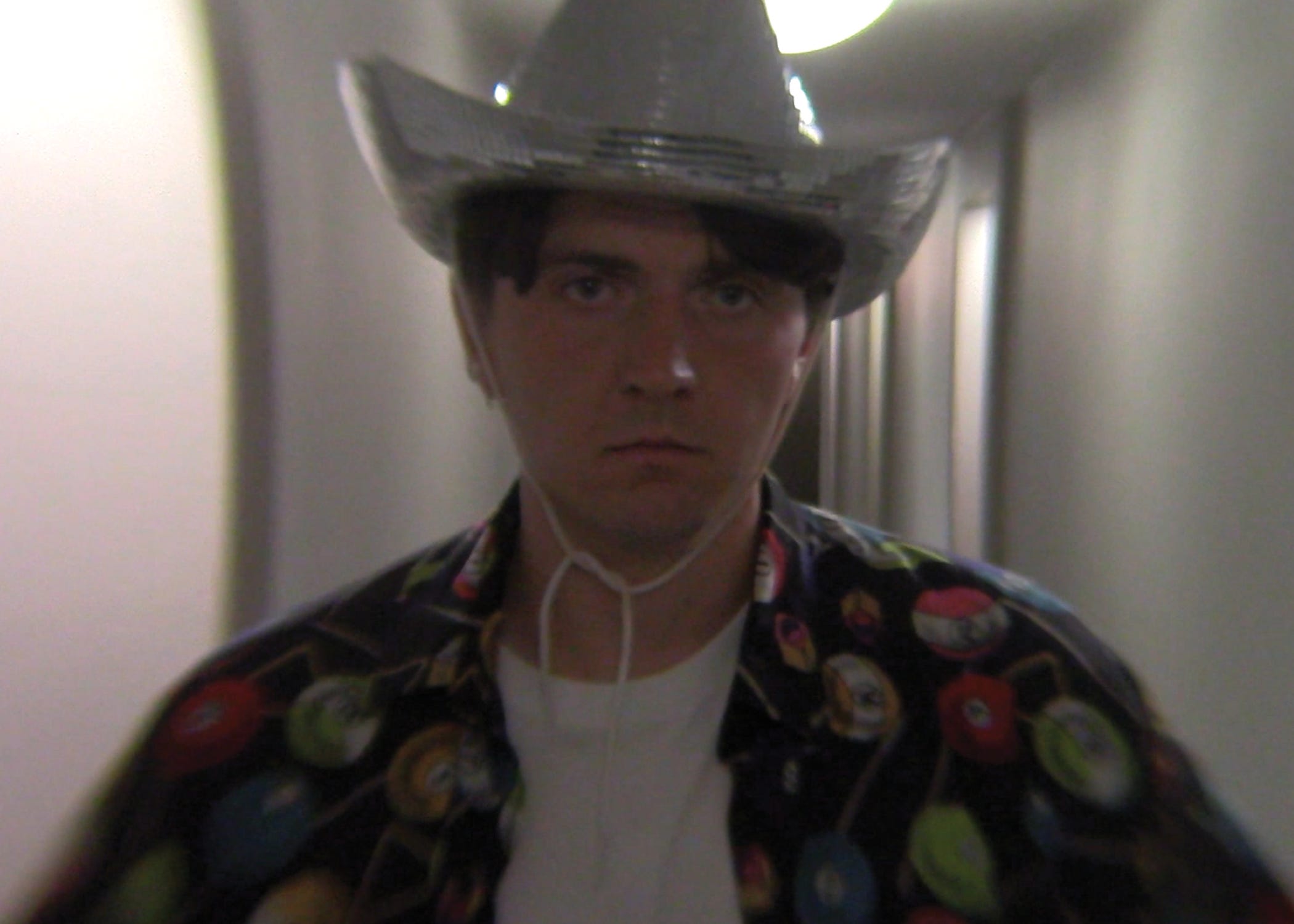
On July 15 at 8:30pm, Bleeding Edge presents the Canadian premiere of Tristan Wheeler’s Toronto Apartment. Tickets available here!
In 2023, Bleeding Edge screened a playful, Nathan Fielder-esque short film about a young Toronto-based filmmaker attempting to become the Poet Laureate of Castlegar, British Columbia. Tristan Wheeler was unsuccessful in gaining official recognition from his hometown, but he continued to make films, following up Poet Laureate with I’m Sorry Cody, a short film about an obstinate filmmaker alienating his best friend by trying to inject drama into a short documentary about his life as a street busker. This follow-up film premiered ahead of the Bleeding Edge screening of Ghost Camera in
Three years later, Bleeding Edge is presenting Wheeler’s most ambitious film yet, a feature-length tale of an unemployed layabout taking advantage of Toronto’s red hot housing market to make ends meet by renting out his apartment for an hour at a time, no matter who the tenants are. Toronto Apartment was made for $10,000 with a great deal of help from friends, including many members of the Bleeding Edge community. We sat down with Tristan to discuss his new film and how he made it.
Transcript:
Alan Jones: How’s that look?
Tristan Wheeler: Pretty good?
Alan Jones: Pretty good. This chair feels like it’s about to snap.
Tristan Wheeler: Cool. Just a couple of dudes chilling.
Alan Jones: We’re here today with Tristan Wheeler, bad boy of Castlegar. Not the poet laureate. He was too dangerous for that position. uh but the director of the upcoming sorry my feet are in the shot anyway the director of the upcoming the dogs are out toronto we’ll leave that in there we played a couple of your short films before uh i’m sorry cody and poet laureate and they both had this sort of like Nathan Fielder-esque mockumentary feel to them. But this one’s a little bit different. It’s all scripted. Can you tell me just how it came about? Like why you decided to make that transition into a more sort of traditional type of film?
Tristan Wheeler: For sure. I think when kind of thinking of what a longer scale project would be and doing that in a way that was feasible for a low budget, it felt like having to like you know, shoot probably like lots and lots and lots, try to find this like different like this sort of mockumentary like angle that would sustain itself for that long just was like felt like like kind of almost like too daunting of a task and like ultimately it’s like I wanted to see what I could take from the lessons from that into like a more scripted style style piece of work. So I was like, okay, well, if I know if I know what I need to know.
Alan Jones: Bagsy. Let’s go.
Tristan Wheeler: Something up a tree.
Alan Jones: Squirrels. Come on. All right. Sorry. So you’re bringing you’re bringing your this style of filmmaking that you worked on with the shorts. Long version.
Tristan Wheeler: Totally. Exactly. And it’s like, and it just felt more feasible, more doable and more controlled to be able to like have a script and then shoot it and have that be the basis of the project. I really like that, that mockery format. And I think that stuff was really fun.
Alan Jones: I guess there’s something that’s unpredictable about it though.
Tristan Wheeler: Yeah, exactly. There’s unpredictability. And like, I mean, also it’s like I wanted to try different, different things, you know, creatively. And, you know, and as much as I love, I love that style filmmaking. It’s like, you know, it’s kind of feels kind of like it’s very kind of buzzy right now. So I’m like, what if I like maybe went away from that a bit and and tried something new to myself in that in that at that scale?
Alan Jones: even though it is a little bit different, you still kept the sort of DIY element to it. It was all shot very cheap, very efficiently with lots of friends and favors pulled in. Can you talk about that experience?
Tristan Wheeler: For sure. I think the thing that really which is so cool about, I guess, you know, being part of the Bleeding Edge family, the Bleeding Edge community is that we have all these like very interested folks that are very interested in doing stuff. And like, so like, I kind of like kind of built in this like, think I’d be able to like get someone for this or like I think you know so-and-so would be good for this if they’re not if they’re not busy or if not them oh this person would also be able to do it and so there was like a lot of like those sort of things both on the crew and then like in the cast just sort of being like well I know I have this like community who’s kind of in the pocket for weird shit obviously like with like stuff that Braden’s done stuff that like Leah’s working on so that Nate’s done you know everybody you know so that Joey Lipak is done you know there’s this like kind of ingrained community so it’s like okay i know i can kind of lean on that for that and then um in terms of like the efficient like shooting style just like you know very bare bones crew where it’s i’m in it and i’m directing it we got braided on the camera and then we have a sound person setups are Frightened turning on the camera, you know, like there’s no lights There’s like maybe we’ll kind of like adjust the lights in the room like what if we like use the dimmer knob if we’re so lucky to have the dimmer knob and like it’s kind of That allows you to kind of play with it a bit more and then also, you know when you’re dealing with a lot of first timers, myself included. I was a first time star in a movie, so I allowed more time to work out the kinks and figure it out and find it and have those fun generative moments on set.
Alan Jones: In terms of the roles, was there anything, you mentioned thinking this person might be good at this role, this person might be good at this role, but was there any roles specifically that you had in mind other than yourself that you were like, I know exactly who’s gotta play this?
Tristan Wheeler: Well, even myself, I didn’t even like a hundred percent know if that was going to be, hey buddy, I didn’t know if a hundred percent I was going to even be the main person. And it kind of came down to like, you know, a like logistics thing where I’m like, okay, well, I think I can kind of do a version of this and I know I’ll be there and I don’t cost any money. So I can be there for that.
Alan Jones: Um, I feel like that’s a thing with a lot of like directors slash stars where it’s like on the outside Maybe it seems like vanity, but it’s also it’s just like a logistical. Yeah It’s one less person to worry about one less mouth to feed Exactly.
Tristan Wheeler: And like i’m in every shot like every scene on almost every single shot of the movie So it’s like, okay Well, you know even just like organizing like weekend shoots with my friends and their various things and you know, obviously I can’t pay them it’s like you know that was even hard for like the other characters so like a lead would have been like even more difficult um and you would have had to I would have had to pay them and all that stuff um but in terms of like other roles like it was really like I think the only ones I was really could really think was like I think my friend Mitch who plays the character Blair he was who I was thinking of and when I was writing it just because I know Mitch and he has like this really fun like kind of like soft but like kind of contained anger vibe to him and but all the other characters were kind of like found as I was, like, talking to people, like, Alex, who plays, like, the person I have a crush on, is, like, so amazing in the movie. And that’s just, like, a friend of a friend who I’d see at parties. And just messaged them because I knew they’re an actor. And yeah. Yeah.
Alan Jones: Cool. And you had Brayden Sitter as the DOP. Folks who’ve come to our screenings probably know Brayden as the auteur behind the Pee Pee Poopoo Man.
Tristan Wheeler: Yeah.
Alan Jones: But I’m just curious sort of what he brought to the movie. I know he brought his little beer can cameras.
Tristan Wheeler: Yeah, brought the camera and brought the vibe in such a good way. So when I was trying to find someone to shoot it, I thought of him because I like how Pee Pee Poo Poo Man looks. I liked how his other shorts looked. And he kind of was like very frank, had a frank discussion with me. He was like, I’m not a cinematographer. Like, I know how to do a thing. It’s going to look bad, but it’ll look cool.
Alan Jones: Yeah.
Tristan Wheeler: And I’m like, it’s a good way to put it. Yeah. Yeah. Like, cool. Like, that sounds good to me. And so he was like really, really helpful in a lot of ways, both like on those onset things, but then also like, you know, became very, very collaborative. You know, I’m on screen and I’m like, really, really trusting him. We didn’t look over any, I didn’t do any rewatching of the footage on the day of. I was just like, I trust you, you got the wide. I trust you got the closeups and then we’ll go from there. And then he was a really key collaborator in showing edits as we went, which later was like, you’re the executive producer of this thing. So he’s also the executive producer on the flick. So yeah.
Alan Jones: Cool. And, you know, is there any good stories that you came, like, you know, doing the no-budget thing when you’re making a movie that you have to run into roadblocks, obstacles? I’m just curious if you got any good stories about things that kind of went sideways.
Tristan Wheeler: Yeah. Yeah. I mean, almost everything feels like it was going sideways. Like you were there on a few days where it was like it was like so behind or like I felt or I don’t know if I was so behind, but I just hadn’t like factored in the amount of time that things would take. So I got people that come way too early and they’re sitting in the sun. Yeah, I remember that. And it sucks when you’re like, I’m trying as hard as I can. And people are still like, what’s going on? I’m like, I’m trying as hard as I can. I’m going insane. I need to run to Dollarama right now. And that kind of stuff was really happening a lot. The one that I really think of was the scene later on in the movie, you know, spoiler alert when I’m getting put into the car. And we were shooting that like it was fine. We’re shooting it in front of the apartment we were shooting at. Again, it was fine. I’m like yelling and screaming. And then because that street is so small and the car was like just parked a little bit, it was like made a one way thing. So people were honking, going crazy. The concierge comes out of the building and he’s like, what are you guys doing? You can’t do this. And it was this big, like, I was like, you like my head, like vibrating like, And we had gotten everything and we were like, okay, everything except for one shot. So I had to like pull over and where I was like managing the relationship of the people I was borrowing like the apartment from, managing the building, managing the crew, managing like all these different things, trying to get the cops called on us. And it was like, we only had one shot of just like the car driving away to get and I was like, okay, everybody freaking just like get this shot of the car driving away like that’s all we need and so that was a big one and then justified clashes with the building where we were doing the last shot in the hallway. Like literally the last shot, we finished it. He comes out. He’s like, you’re not allowed to do that. I told you, you’re not allowed to do that. And he’s walking away and I’m chasing after him wearing that like cowboy hat. And I’m like, sir, cause it’s again, it’s not my apartment. It’s like, they get like some sort of write-up that I mean, that’s I’m fine to get a write-up. I don’t want someone else to do that. So I’m like, I like put my arm in the elevator. He’s like trying to go down. I’m like, sir, like, Are you going to write a warning? And then I take him and I was like, you’re never going to see me again. You’re never going to see us again. And I literally followed him all the way down to the lobby and he’s like, I don’t know if I will. I don’t know. I was like, okay, but you will never see me again. And I don’t think he did, but there was a time when I’d go visit those people and he would give me a stink eye every time I went, which is very fair. I made his job really hard for a few days. We got everything we needed. It happened at the end of the day. So yeah.
Alan Jones: This movie is touching on a lot of issues that I think the audience will be dealing with. The cost of living in Toronto, being able to survive, trying to make ends meet, having to be a hustler. So where did that come from?
Tristan Wheeler: For sure. I mean, it comes from a lot of different places. I think like the kind of the essential conceit of like you’re broken up with, you can’t afford your apartment anymore because you had a one bedroom.
Alan Jones: Yeah.
Tristan Wheeler: You know, like that’s like, I think a very real thing and something I was dealing with. So I had to like, you know, I was like jumping. I was the one jumping around to subleases for a while and like, you know, friends of friends and, you know, doing that thing. So that’s really born out of my experience. And then I think like a big part of it is like, I don’t know if you feel the same way but you’re like a creative guy, you’re a creative person and like you live in this city and it’s They want you to be like a hustler. They want you to hustle. They want you to be an entrepreneur. And I like hate that stuff. I hate hustling. I do it for my own stuff, like hyper focus-ly, but like it’s like, I’m like, ah, you know, like it’s like, and like that is a huge thing I’m always thinking about. It’s like, it sucks that I have to be like an entrepreneur. I have to like be like a social media guy. And I have to like, you know, like, figure out how to pay people on the set and all these sort of things.
Alan Jones: Again, yeah, there’s like a thing when you’re when you’re doing these like low budget film shoots where like the shoot itself is the hustle. Yeah. And there’s like there’s typically speaking, there’s no like pot of money at the end of it unless you’re, you know, the Blair Witch Project or whatever. Yeah, yeah, yeah. But it’s like the shoot itself is the hustle. And then it’s like you’re doing other stuff to pay the bills. But, you know, I sometimes wonder, I’m like, what if I just put all my energy towards, you know, making a living?
Tristan Wheeler: Yeah, but then I can’t, because I’m sick. But it sucks. Yeah, because I’m sick, I can’t. I know, like, there was a time in January where I was like, before I got into Mammoth Lakes, or before I like got any inkling of that happening, I was like, it was having this like a true like, I’m putting all this energy into this thing. I’m getting no reward. I should maybe put all this energy into getting a good job or my career, whatever that means. And then I can make movies the same way guys have a Steely Dan cover band. Which I still think is a feasible way of doing it, but I was like, maybe I just stop trying to make that the main thing I’m doing.
Alan Jones: Why don’t you tell me about Mammoth Lakes? World premiered this in California at Mammoth Lakes. It looked like a really fun time just looking at the social media stuff. What was that like?
Tristan Wheeler: That was super cool. Yeah, I had never, I hadn’t heard of the festival and I had submitted to Slamdance because that’s one of the ones you’re supposed to submit to. And didn’t get into it, but one of the programmers there is also a programmer at as the head programmer at Mammoth Lakes. And he reached out to me, he’s like, love to talk about your movie and Mammoth Lakes. And we had that and I sent it to him and obviously had the premiere, which was like really, really cool, you know, in California, where they make movies. Five hours from Los Angeles, but still where they make movies. But it was like, it was like kind of like summer camp. And like, they do a really good job over there of like, like curating like a fun, like a bunch of other kind of weirdos, like the bleeding edge from all these different parts of the world, the country and the world, you know? And all of different scales and things like that. So it was really, it was really fun. It was like, yeah, it was like summer camp, just like hanging out with the same people every day, being like, hey man, I’m going to this now, I’m going to this, yeah. And the screening itself, I think, went well. It was like a matinee screening. And I think which kind of, in a lot of way, works for this movie. And you know, it’s like a movie. It’s like people like it. They like it, you know? It’s like they don’t. They’re like, this looks cheap and bad. I’m like, yeah, that’s what it is. So you’re not going to like it. And I got the thing which is like the biggest reward I could ever want. You know, I didn’t get any, you know, no, don’t need no jury award or audience choice. But the next day I was standing out front of another screening, just talking to one of the other filmmakers and this like 10 or 11 year old boy comes up to me and he’s like, are you Locke? I was like, yeah, man, I’m Locke. He’s like, oh, I love Toronto Apartment. And he was raving about it. I was like, OK, if it’s just like, if I’m getting an 11-year-old kid super amped about this, then that’s kind of who you’re making it for, you know?
Alan Jones: That’s awesome. Yeah. Did he ask for an autograph?
Tristan Wheeler: He asked for a photo.
Alan Jones: Awesome.
Tristan Wheeler: Yeah, I got a photo. I think his name was Zach, doxing the kid.
Alan Jones: So you decided to act in this. You’re kind of front and center in both of your other movies that we screen. I’m sure you’ve done other stuff before that. But I guess I’m just wondering, what’s your sort of performance background?
Tristan Wheeler: Yeah. I’ve only ever acted in my own stuff. Never did theater. never did like drama or anything like that in any serious way. I think I was just like, it’s all movies, baby. And but I mean, I was also like, I mean, I don’t know if the case what the case was for you. But like in town, I grew up in, it was like drama. Like there was no there’s not a lot of like resources for these things, too. So I’m like, this feels like like a waste, unfortunately. Yeah. So it was like, I only have ever acted in my own stuff up until like very recently where I was like, you know, in my movie and then I was, you know, Stephie’s movie and like, like just kind of like smaller parts and that kind of stuff, which is, which is, which is fun. I think all I can do is like, Just sort of like try, I guess. Yeah.
Alan Jones: But is there like what comes into the character of Locke? Because I mean, I feel like coming out of, you know, when we were test screening it with certain people, like one of the things that everybody said was like, it’s just awesome looking at Tristan, like when he’s in character, because it’s just like there’s nothing behind his eyes.
Tristan Wheeler: Yeah, yeah. What’s behind it? I mean, like, I think, like, the biggest thing, the biggest, like, you know, like, direct, like, reference or influence I was trying to go for was, like, Charles Grodin in, like, Heartbreak Kid.
Alan Jones: Yeah.
Tristan Wheeler: The way he, like, smiles.
Alan Jones: Right, right, right.
Tristan Wheeler: And the way his eyes are, like, he’s, like, so, like, he’s just smiling because he knows that ingrates you to him. Yeah. And that’s it. Like, it’s not a real, there’s no real happiness behind it or real genuine feeling behind it. So like that was a big thing and then like I think again looking at like and then I think of the other like the other elements are like kind of like the dark things I think about myself just sort of like like like making them like making them real and exercising them out of myself or it’s like you know you know I worry about like do I like When I talk to people, does everyone think I’m faking it? And it’s like, okay, what if I really did fake it? What would that look like? Yeah, that kind of stuff.
Alan Jones: Yeah, it helps in comedy to just sort of think about things that you think about and how you would act if you had no inhibitions.
Tristan Wheeler: Yeah exactly like what if the anxiety was right and that’s how I that’s what anxiety was right and that’s actually how I act yeah that’s how everyone perceives me um and like what would I do if that was the case yeah and I didn’t care yeah which is free which is very free yeah yeah.
Alan Jones: What else is coming out from the auteur Tristan Wheeler?
Tristan Wheeler: Oh my god I don’t know I Just gonna start writing and start being more productive. I say that, you know, I try to be gentle with it, you know? Yeah. Yeah, but got some ideas coming together. I’ve kind of had this like very, very long, like two year long running notes app where it’s like this one idea for a movie that I’m trying to like flush out. So I just need to like, I think after the screening, try to get, try to get it done before the end of the summer. Was it a big bug? Or was it maybe not? Yeah. Yeah. Try to get it done before the end of summer.
Alan Jones: All right. Yeah. I mean, I think that sounds pretty good to me. It’s going to look real goofy with this just one angle. That’s all right. Just do it yourself, baby.
Tristan Wheeler: Yeah, yeah, exactly. Sweet.