

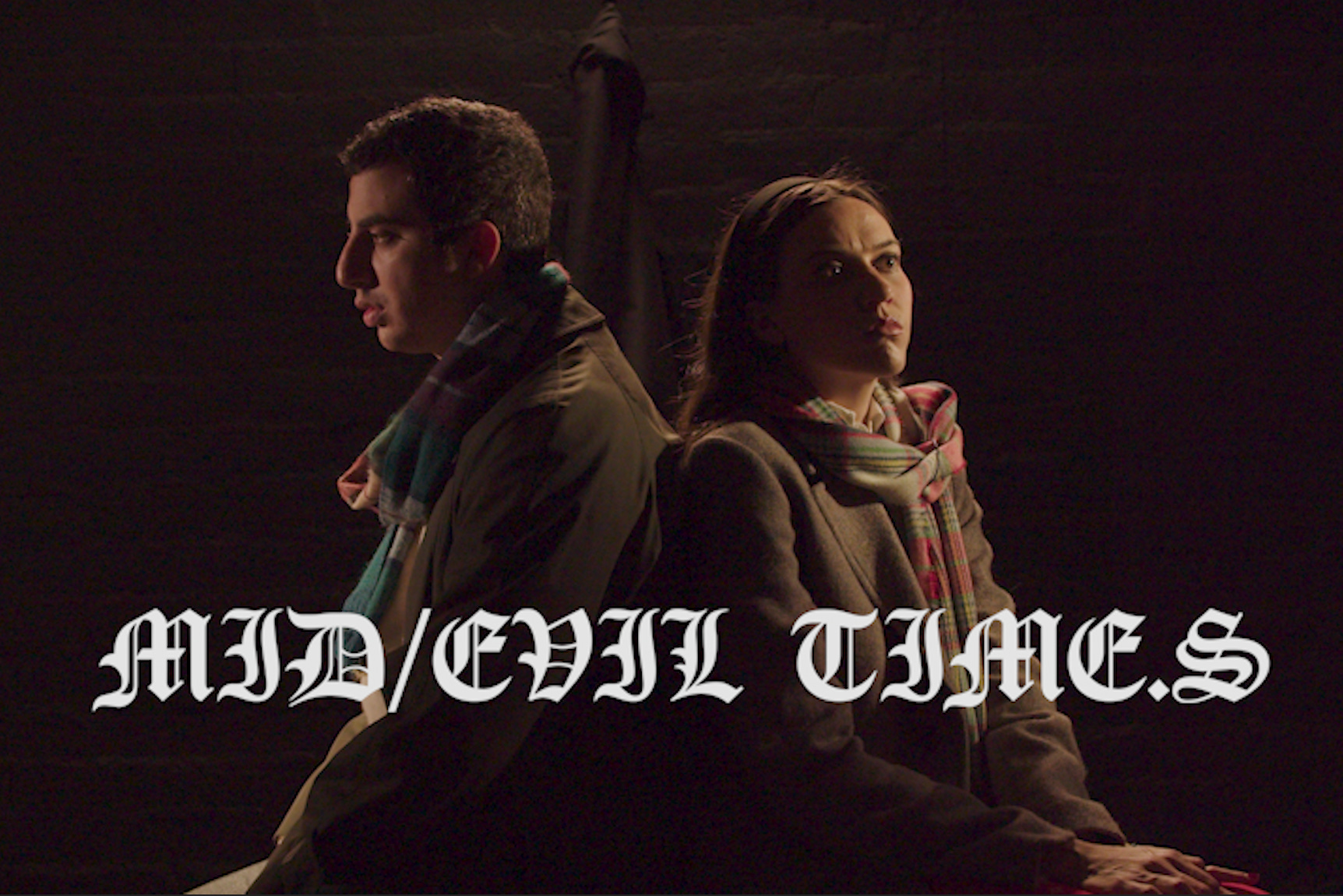
On March 10 at 8pm, Bleeding Edge presents the Canadian premiere of Devon Daniel Green’s Mid/Evil Times, preceded by Matthew Chan and Jack Loyello’s A Watched Pot Never Boils. Tickets available here! Message us on Instagram for instructions on how to get to the venue!
Described by its director as “anarchic and crazy” in its formal strategy and inspired by Jean-Luc Godard’s subversive post-New Wave period working in French television, Devon Daniel Green’s Mid/Evil Times functions not only as an energetic and entertaining piece of lo-fi entertainment but also as a testament to working outside the system and making movies with your friends.
Shot in beautiful Los Angeles, California, but divorced from the fashions and fads of the industry closeby, Green’s comedy is set in a future where criminals are sentenced to act in art movies rather than to serve jail sentences, but this is merely a jumping off point for a rules-defying, scattershot, largely shot-on-video approach to cinema that picks up where Godard left off.
Lest that sound too high-falutin’, we assure you that Green is a funny and acerbic filmmaker, filling his standard definition frames with faces that our audience might recognize, including Toronto-to-LA transplant Robert Dayton, filmmaker Tucker Bennett and Noah Brockman, star of Adrian Anderson and Patrick Gray’s Pomp & Circumstance.
Having premiered his film at WHAMMY! Analog Media’s SOV September in the fall, Mid/Evil Times arrives at Market Video on March 10 just after its New York premiere at Roxy Cinema on March 9. We chatted with Devon about making his film, shooting on video, and the DIY filmmaking scene in LA.
BLEEDING EDGE: Why don’t you give us the rundown on the original idea for this film and how it came to be.
DEVON DANIEL GREEN: For the longest time, I was trying to make an actual documentary. I wanted to make a documentary about the Ren Faire. And I was imagining it being a Frederick Wiseman–style, observational, day-in-the-life documentary. But obviously you need a huge amount of access to be able to do that, and I had none. I tried to just bring my DV camera into the Ren Faire two or three years in a row, and they stopped me every time. Well, they didn’t confiscate it, but they stopped me at the door. These security guards were essentially just like, “You can’t bring that in there.” My first question after this every time was, “Every single person who walks in the door right now has a phone with a camera on it. Everyone’s filming this. Why is this any different?” And they’re just like, “People are gonna be uncomfortable if they see you with that,” which is maybe a whole other conversation to have. So I kind of gave up on the idea of a documentary about the Ren Faire. At the time I was watching a lot of post-1968 Godard movies, and there’s this one called Joy of Learning that really took hold of me. It just struck me as a really interesting format to present a bunch of ideas. It’s sort of an essay film, sort of a documentary, but it’s very presentational. I pulled that for the first 15 minutes of Mid/Evil Times, and was truly thinking: all right, this will be what the movie is. I’m just gonna make a short. But then we shot that footage of the punk show that happens in the middle of the film, and the drummer for that band approached me after filming and was like, “Just so you know, if you ever need anything else from me, I’m an actor, and I always play a shaman.” I was like, okay, that’s interesting. I was already thinking, just because the day went really well and I felt like there was more creative juice left in this idea, “maybe I can film some more for this.” And when he said that, this idea of a shaman who’s pulling the strings of this whole world presented itself. And I slowly started coming up with the rest of it piece-by-piece.
BE: Can you talk a bit about Joy of Learning, the Godard movie you’re pulling from?
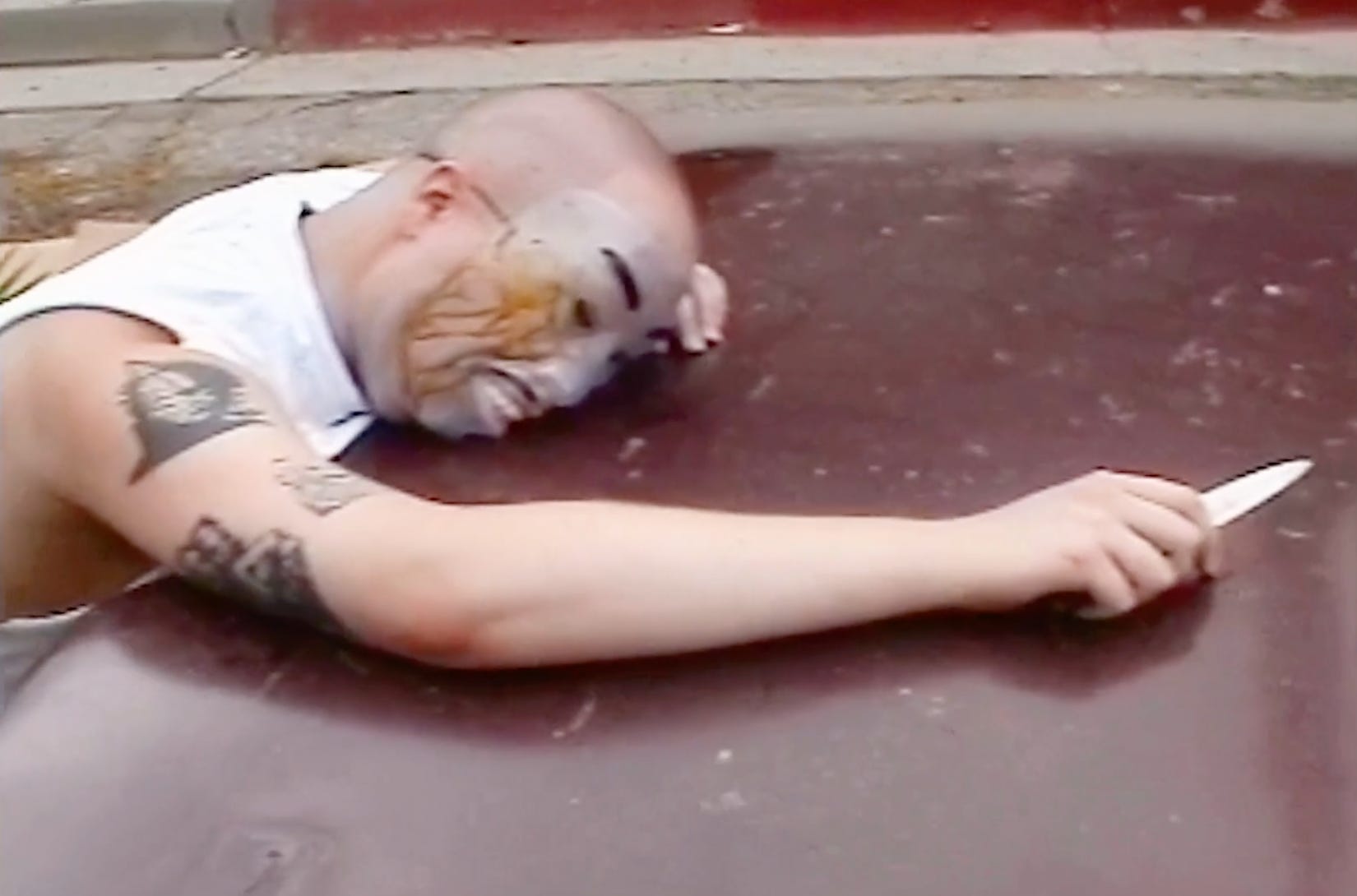
DDG: It’s the movie that I’m most heavily directly quoting. It’s two actors in a black-box studio giving these didactic, discursive monologues about the idea of learning. But then Godard is slipping in all of this incendiary stuff that he usually does. I don’t know enough about what was going on in French PBS or French public access at the time, but it almost feels like him talking some shit, trolling that format. Making something that’s supposed to be packaged in the form of a PSA, but he’s putting in all these subversive Marxist ideas that at the time were probably really playing with fire. All of the stuff in the beginning with the two criminals who are being forced to perform in a movie called “The Medieval Times,” the aesthetic and format of that is inspired by Joy of Learning.
BE: In your time researching the Ren Faire, what ended up seeping into the movie from that period? Was there anything specific you felt you had to say something about?
DDG: When I realized I wasn’t going to be able to actually film in the Ren Faire, it stopped being about the Ren Faire and more about Renaissance aesthetics. Cosplaying, the idea of recreation in culture, copies of copies. But I wanted to stick to it because it’s also an aesthetic that I’m really drawn to. As far as what’s being directly pulled for the movie, there’s a couple sequences where I just have still photographs from the Ren Faire, because that’s all that I could get. There was no lesson that I pulled from my time at the Ren Faire other than just soaking up the vibes. They hit all of the archetypes. There’s a jousting section, there’s wenches, there’s trolls, there’s performers rolling around in the mud. The only thing that they don’t have is anything devoted to the idea of medieval torture, probably for obvious reasons. But personally, I want to see that. Maybe I can push that and make it my entryway into a sequel.
The other thing I’ll mention about going to the Ren Faire is that there was a point during shooting all this when I was in regular conversation with a performer at the Ren Faire that we go to here in southern California called Pleasure Faire Irwindale. This guy’s whole shtick is that he lights whips on fire and then flips them around in the air and cracks them. He’s in the Guinness Book of World Records for having the most flaming whip cracks of all time. I had talked to this guy for like four or five months. I was messaging him all the time. I thought he would be my access into the fair and he’d have a part in the movie. I had a whole section written for him, and at the last second he was like, “Uh, I’ve decided this doesn’t sound appealing to me at all. I’m just gonna go perform on a cruise ship.” I was like, “Great. Okay.” It’s strange too, because I feel like he was with me when I was being vague. But as soon as I started showing him the cast and letting him know that I’m a real filmmaker, that he can trust me, that’s when he got suspicious.
BE: Seems like once it was clear he’d have a responsibility to do something, he backed out.
DDG: He had to be doing the math in his head. “Is this weird guy’s project worth me compromising some aspect of my job, which I’m setting world records in?” It makes sense that he said no, but I was pretty disappointed.
BE: This was shot on video. You seem to be very keen on stuff that’s shot on video. Why is that? Were there challenges that came with shooting on video?
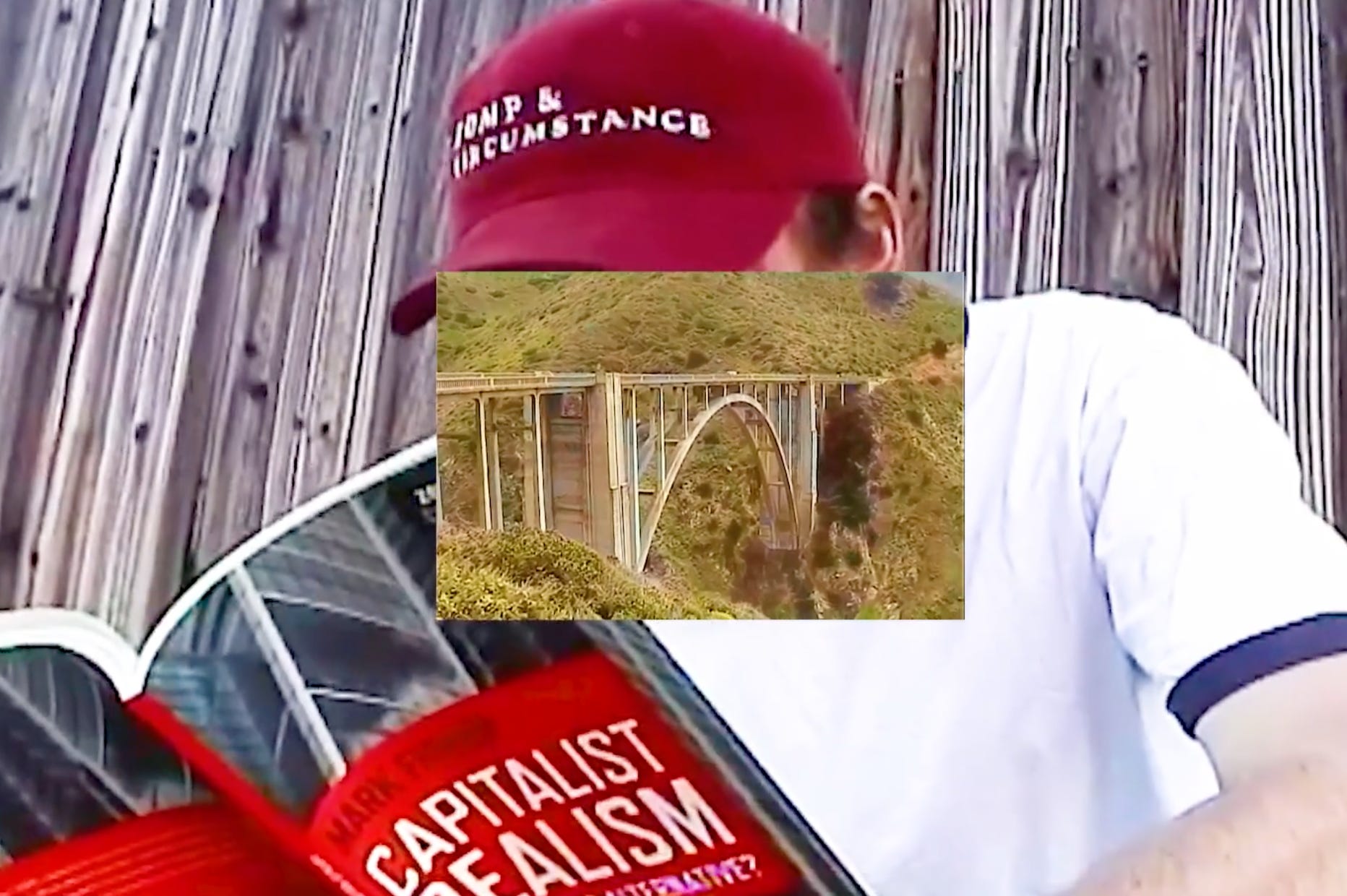
DDG: I’m 100% a shooting-on-video enthusiast. And a watching-things-on-VHS enthusiast. Everything about the production of this movie was informed by necessity, including shooting on video. It’s an incredibly accessible, easy-to-work-with format. Very pleasurable, dynamic. I personally prefer the image-making that comes from video. Sometimes it feels like a caveat that you have to sell to people. I understand that’s a reality, but it’s not my reality. I like to try to point out that it’s a movie that’s shot on video, but it’s also shot on multiple formats. There’s still photography, several different video cameras, there are some hi-def cameras in it. I feel like that’s more reflective of the movie in a way that’s easier to talk about. The text of the movie is kind of anarchic and crazy — fourth-wall breaking, not saying no to any specific ideas. If we used the video cameras and the hi-def cameras in a way where we differentiated them by some sort of diegetic rationalization, that wouldn’t fit with the text of the movie itself. You never know what the context is. There’s stuff that’s surreal, stuff that jumps around in the future, there’s fourth-wall breaking. Throwing tons of different formats into the mix really captured the spirit of the story I was trying to tell. More than saying, “This is shot on video because we’re making an SOV horror movie,” or “It’s shot on hi-def because we’re making a comedy.” It felt like it made sense to make a kind of mosaic. But it’s also a happy accident because it was born of necessity. We had access to different cameras and audio equipment every time we shot. So let’s just say yes to all of this. Otherwise we won’t do it.
BE: When we were talking to Josh Heaps, who directed City Wide Fever, he was talking about how when you shoot something on video, somebody who doesn’t know a lot might just assume that you can’t shoot any better than that. Even though your phone has higher definition than a video camera. Did you face any questions like that from people you were working with?
DDG: Luckily not. It probably just speaks to the kind of people I surround myself with. Maybe my DP, who tried to have a more serious conversation with me early on about camera motivation and what diegetic cameras are in this world. And I was kind of averse to that because I knew it would be an extra logistical challenge. I had one programmer watch it and they responded with a message that made it clear to me that they thought a lot of the footage was supposed to be CCTV footage, which is not the case at all. I didn’t correct them. If that’s what you see, then that’s your truth!
BE: Yeah, that’s mentally what you might associate it with right now.
BBG: 100%, it totally makes sense they said that. But for me it’s just a cinema camera in this world that’s being used to collect this footage and tell this story. Shooting on video thus far has only helped me, I think. I have friends that I talk to all the time about the way that high-definition cameras have sort of plateaued, where they all look the same no matter how much they’re progressing technically. The only way to differentiate yourself in that landscape as a filmmaker is to do something that’s completely outside of that box, which is something I think a lot of people are gravitating toward and is a really positive thing.
BE: There’s difficulty if you don’t have enough light, but you can kind of shoot as you go. You don’t need big setups or anything.
DDG: That’s totally true. It really just depends on the movie you’re making. There’s some stuff where it wouldn’t work. I’ve shot interiors that weren’t lit with the same cameras we shot Mid/Evil Times on. I would argue there’s an advantage even doing that. If you have to shoot in a location without a real gaffer, without professional lighting, I would almost prefer the video camera because you can crank up the exposure and fuck around with the colour to get yourself out of the darkness in a way that’s more permissible with video than you can with hi-def stuff. If you’re in a situation where your shot is underlit and you’re on a 4K camera or something, you’re pretty fucked. But if you’re doing it on video you just crank it the hell up and you’re like, “Hey, guess what? The shot’s weird, just like the last one.” And everyone’s like, “Cool, I’ve never seen that before.” The way that all this started was that I got into SOV September at Whammy!. I think there’s a growing audience for this.
BE: Well maybe there’s an increasing fatigue with what you were talking about — the way that when you turn on Netflix everything kind of looks the same.
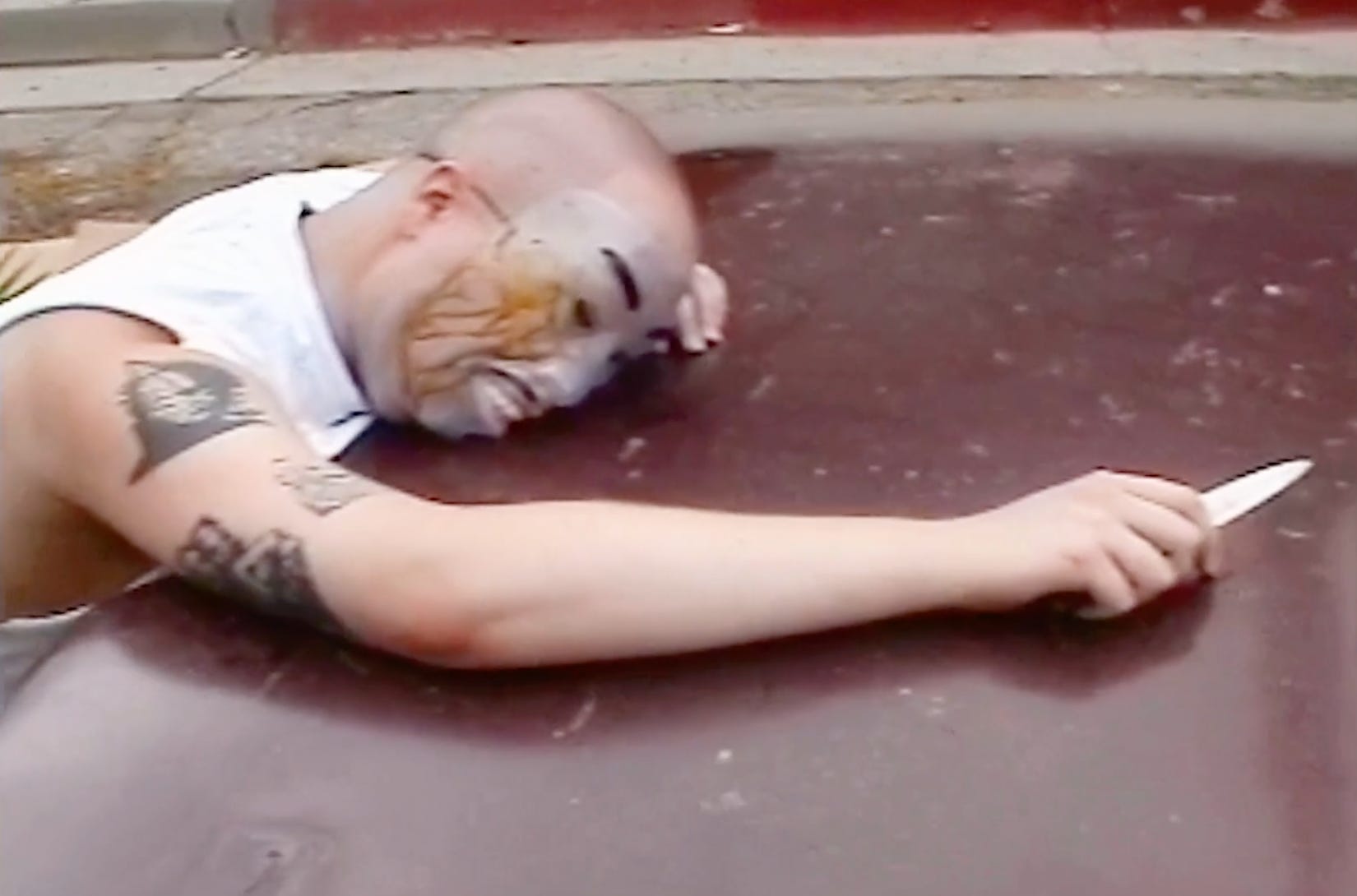
DDG: I think viewers are naturally going to judge things based on images first and foremost. If you’re shooting your art film on the same camera that television commercials are shot on, you’re unconsciously evoking an aesthetic that maybe you don’t want to be associating yourself with. Maybe you can get out of that. Maybe the editing, the story, the acting are all really good. But I don’t know why you’d want to fight that uphill battle if you don’t need to.
BE: Maybe we can talk about the premise of the movie. Prisoners being sentenced to star in an art film — where did that come from?
DDG: That is something I literally have no memory of. And it’s crazy, because that feels like a eureka moment. I’m only saying that because every time I describe the movie I use that as the elevator pitch, and everybody responds so positively that I just knew it was a good idea. But the Joy of Learning thing came first, and I’m pretty sure when I was writing those scenes I just came up with that framing device to explain why they’re there. That first 15 minutes of the movie — everything the criminal actors say is dialogue that I had written down as notes while I was reading whatever books I was reading at the time. Then it was translated into dialogue, then pared down so that it’s actually speakable dialogue, and then I came up with a justifiable comedic premise as to why this would all be happening. I worked completely backwards. I don’t have a specific moment where it came to me, but it felt right. It felt like something that would happen in our world right now. There are many things that happen in the plot of the movie that I wrote two or three years ago that have kind of come true. A lot of people have pointed out to me that the kidnapping scenes really resemble ICE kidnapping videos, which is obviously pretty horrifying. And also the whole bit about how the Criterion Channel in the future becomes a weapons manufacturer company. That was just a joke that I wrote in, and then a year later it came out that the company that owns MUBI is owned by a company that produces weapons for Israel. So I don’t know if there’s gonna be a ton of stuff like that. We’ll see what happens next.
BE: There are some familiar faces in the movie — Tucker Bennett, Robert Dayton. I’m wondering what your attachment to this Los Angeles DIY scene is, and how it all came together.
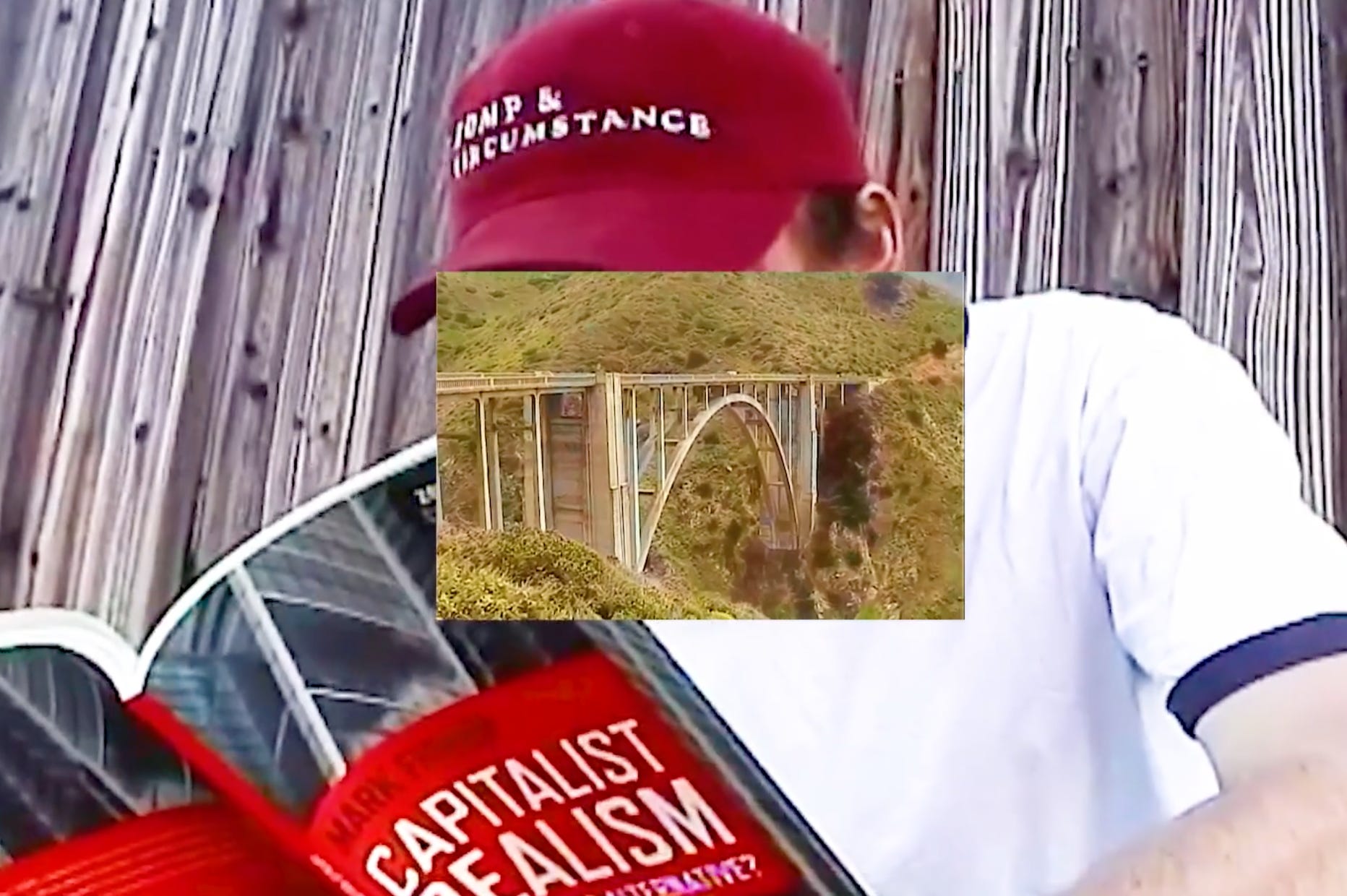
DDG: Yeah, I’m very attached to them. The lifeblood of my whole creative process depends on having access to this group of people that want to do stuff just for the love of it. I’m lucky that that’s really thriving here right now. I knew Tucker beforehand, and some of the cast members I met from working on his film In the Glow of Darkness. So there’s a little bit of crossover. There are tons of people in this movie that I cast just from meeting them at movie theatres. Robert Dayton specifically was just someone that I sat next to at Whammy! over and over again because he was always at the screenings. Getting to know his personality, I thought it would be interesting to have him and Noah Brockman [who also starred in past Bleeding Edge screening Pomp & Circumstance] — who’s his scene partner in the framing structure of the movie — opposite each other. Noah is a very didactic, cerebral thinker and Robert is an earthy, emotional, instinctively funny person. And so I created this whole scene based entirely off seeing their dynamics contrast against each other. All of this is to say that there are portions of this movie that are not only practically dependent on access to the DIY scene, but informed by it. Because there are screenings to go to every night really, so I’m able to get to know these people really well, and it helps inform the movie on a personal level.
BE: What are your SOV movie influences?
DDG: I’m definitely inspired by the SOV horror that has a big following now. It’s kind of at the centre of a boom. A lot of theatres here like Whammy! and Video Archives play a lot of SOV horror. But also a ton of Godard movies that were shot on SOV, specifically his 80s and 90s stuff when he was sort of kicked out of the industry. The only way he could finance movies was by working in basically TV, but he would 100% just use that format as a way to sneak a Godard movie through the back door, just in an SOV format. Another movie I wanted to shout out was Personal Problems by Bill Gunn. That movie is incredible. It’s over three hours long, it’s an all-Black cast and I believe an all-Black crew, and it’s shot on video. I really feel like Bill Gunn was the first one to establish how classic Hollywood melodrama would look and feel on tape. That movie really built the language of how to take grandiose, bursting-at-the-heart emotion out of Hollywood and put it onto a consumer format and make it work. I stole a ton of stuff from that for the strands of Mid/Evil Times with the theatre kids who are in the process of breaking up. It’s on Kanopy. Find it however you can. It’s really good. Even just watch the trailer.